
Cemetery of ships
Termiz, Uzbekistan
2024, Senior, Art: Handcrafted (2024 – )
Reflection
Reflection
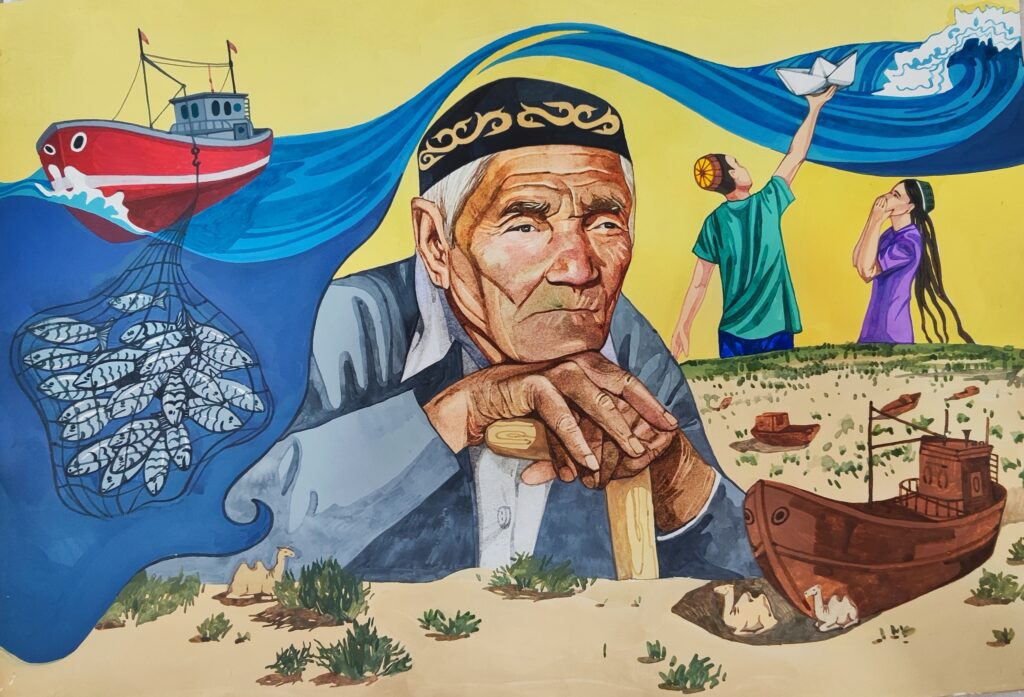
I would like to reveal a vivid example of how humanity is not using natural resources wisely in the tariff of my picture. The Aral Sea was the 4th largest in the world half a century ago and has now become a desert. Almas Tolvashev, a 78-year-old native of Moynuk, says: "In the past, life was hectic in the Aral Sea. There were more than 250 ships, and my ship was called Volga. It was one of the traditions to teach children to fish from a young age." But now we see the end of this tradition when we see children playing in the island sea, carrying paper ships in their hands and becoming captains. Now the Aral Sea is called the Dead Sea because there is nothing left but rusty ships. Therefore, this lake can be compared to a graveyard of ships. In addition, various plants and rare animal species in the Aral Sea also died. Even paleontologists found fossils of whales, sharks and various fish in the Aral Sea. In addition, the salt accumulated on the shores of the Aral Sea is blown up by the wind, causing public health problems, long-term melting of glaciers, rising ocean levels and increasing global warming. Many years ago, all this happened as a result of the irregular use of river waters that supply the Aral Sea. A solution is to divert the waters of the Ob and Irtish rivers, which flow through Russian territory, to the Aral Sea in Central Asia, because the level of these rivers is rising and the arctic glaciers are melting. I hope that everyone who sees my climate piece and reads my story will understand how important it is to use natural resources wisely in their area and to help nature as much as possible.