Diving Deeper
Raleigh, NC
2024, Senior, Interactive & Multimedia
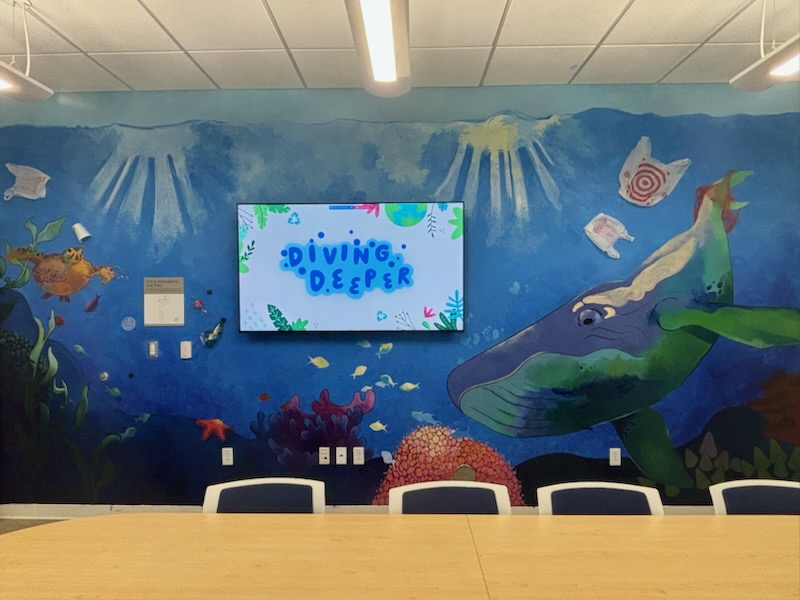
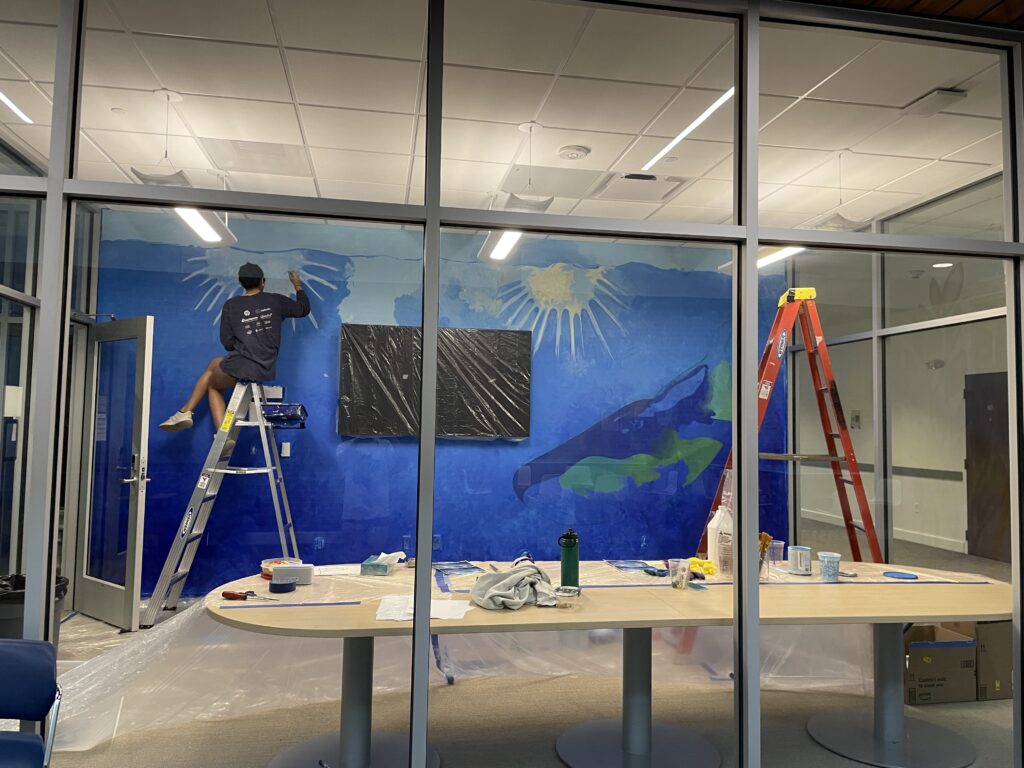
Project Description: This multimedia experience conveys a message of hope amidst chaos, harnessing the ocean’s fluidity and movement to symbolize change within our community. It is located in a fishbowl conference room in our school’s Center for Math and Science, hence the use of marine life. By incorporating real-life pieces of trash obscuring a panoramic scene of the NC coast, we make environmental issues more tangible. This display utilizes a 10×19 foot hand-painted mural to depict a hopeful future to work towards, daily waste collected from our school campus to actualize our role in magnifying climate issues, and a digital infographic to educate and involve our community members, thus creating an interactive experience for the viewer.
Reflection
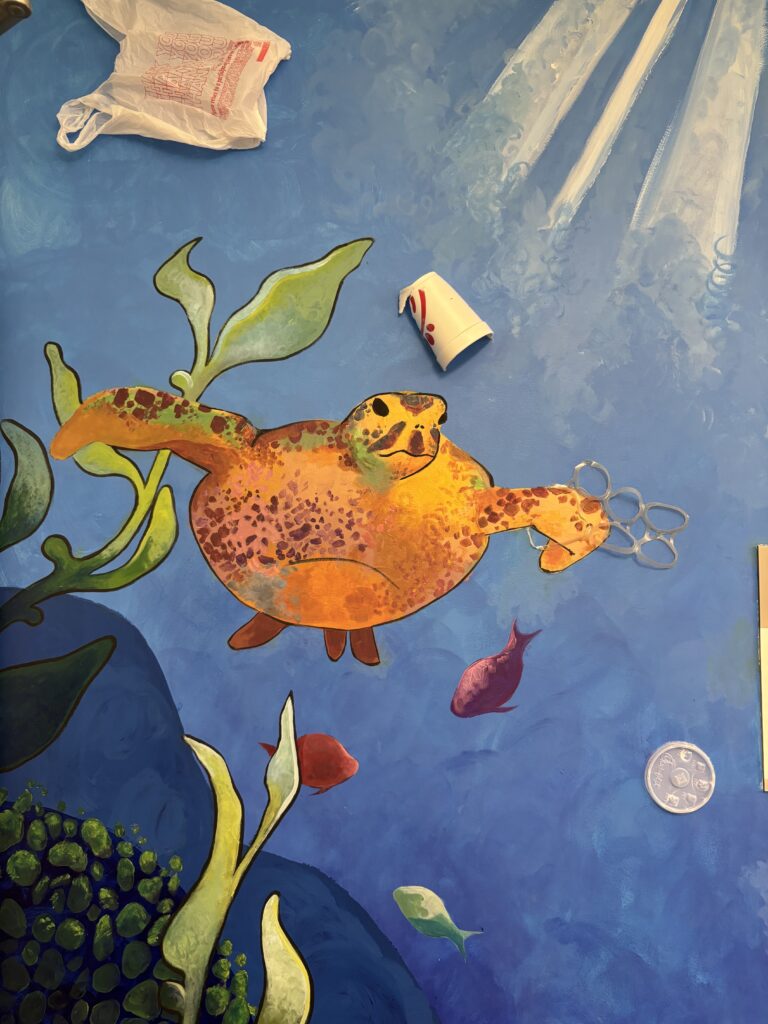
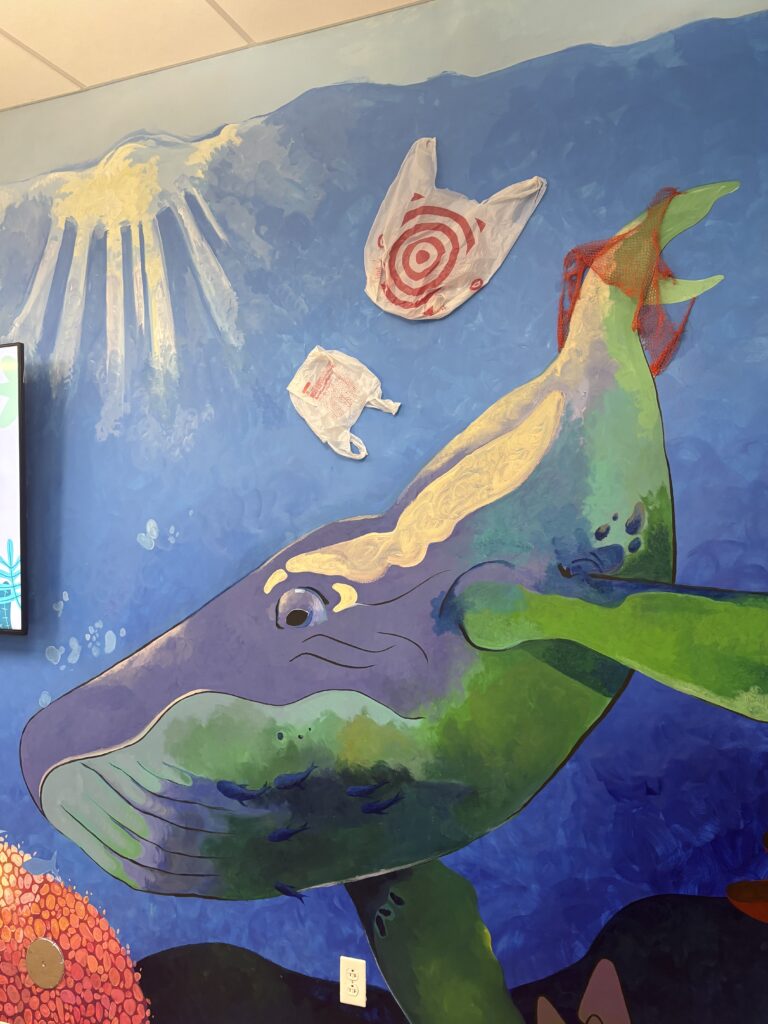
As we sponged in the first washes of blue and got our first few stains on the surrounding walls, we quickly learned to trust the messy, layered process. Many glazes later, we’d gotten our first reactions from passersby. However, the resounding comment we received was to cut out the litter from our design, which was originally intended to be painted along with the rest of the mural. Teachers and students complained that it ruined the beauty of the scene. Over the next few weeks of refining coral and ocean life, we mulled over this feedback. How were we supposed to make an impact without making our mural “ugly”? After discussing our issue with more people, our physics teacher came up with the idea to make the litter real. If we affixed actual trash, we could inspire our audience instead of deterring them. We sanitized litter found around our campus, halved bottles, stretched six-rings, and folded bags, garnering more attention with each addition. Rather than feeling threatened by an issue seemingly too vast to fix, using real litter gave our audience a tangible first step to combatting habitat destruction: picking up their waste! We chose plastic waste in particular because it's our most direct impact as a school. Plastics are responsible for 3-4% of gas emissions, but additionally harm ocean plankton and bacteria, physically impair organisms, and decrease the light reflection of the ocean thereby increasing temperatures. This relates directly to both the climate crisis and ocean vulnerability mentioned prior. In addition to just depicting our impact, our educational slide show piece extends our mission further by discussing next steps. Our best method to mitigate destructive behavior is education. Changing attitudes and behaviors of our youth can help them make informed decisions and empower our generation.