2027 Contest Resources: Nature of Truth
Welcome to the Resource Studio for the 2027 Blue Planet Awareness Contest: Nature of Truth: Environmentalism in an Age of Disinformation! Explore examples of climate misinformation below!
View the 2027 Contest Resource Studio as a PDF here.
Table of Contents:
Misinformation vs. Disinformation
Misinformation is simply inaccurate information. In contrast, disinformation is false information that is deliberately created to mislead the public or a certain audience (American Psychological Association).
Examples of Environmental Disinformation
Astroturfing
Companies pay people to create fake “grassroots movements” that appear to be real, but are secretly funded by the industry. Oil companies have done this to make it seem like the public opposes clean energy, when really the campaign was run by an oil industry lobby group (Union of Concerned Scientists).
Artificial Intelligence/Deepfakes
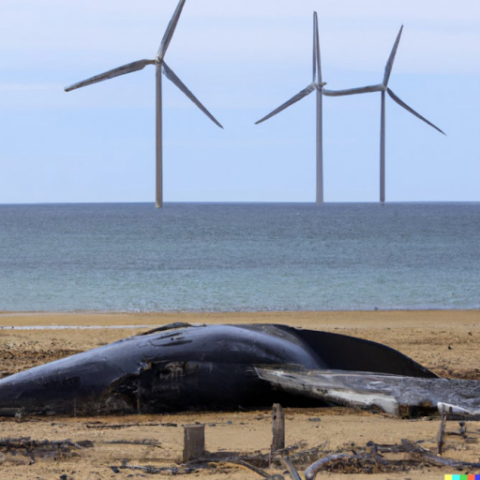
AI tools make it easy to generate fake information, audio, photos, and videos. In 2023, the Texas Public Policy Foundation used AI to generate an image of a whale washed up on shore in front of wind turbines. This was aimed at convincing people that wind farms are killing whales (Gizmodo).
Cherry-Picking
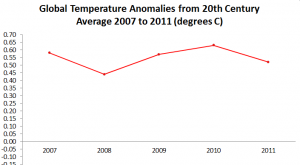
This involves only selecting information that supports one’s argument and ignoring the rest. According to the graph below, since 2011 was slightly cooler than 2009 and 2010, cherry-picked data could be used to claim that climate change stopped in 2011 (Forbes).
Climate Doomism
The belief that climate change is already too catastrophic to fix, which discourages people from taking action. For example, some people on online platforms like Reddit argue that humanity has already passed a permanent point of no return and climate action is hopeless. This is scientifically incorrect, as action can still be taken.
Why is climate ‘doomism’ going viral – and who’s fighting it?
Confirmation Bias/Echo Chambers
This is when people mainly see information that matches their preexisting beliefs, which makes their views harder to challenge or change. It occurs through social media algorithms. This could be a social media user whose Instagram feed only shows posts that align with their personal political views. As a result, the user ignores facts from other viewpoints and believes that everyone agrees with them.
Doctored Data Visuals
Charts or graphs manipulated to make a trend look different than it actually is. This is typically done through scale, cropping, or axis changes. An example of a doctored data visual would be a truncated y-axis, where a bar graph starts at a number other than zero to make a tiny change look disproportionately large.
False experts
When someone acts as if they have authority or credibility to provide information on a topic when they have none. Dr. Gillian McKeith is an example of a false expert who uses unaccredited titles to give advice about nutrition.
Are You Dealing With A Real Expert Or A Fake? 7 Ways To Tell
Greenhushing
When companies do not disclose the progress they’ve made to the public to avoid backlash. An example of greenhushing would be if a company switches to sustainable materials and reduces its carbon emissions but does not disclose this publicly due to fear of greenwashing accusations.
Greenshifting
When companies shift the blame for environmental destruction from the company to individual consumers. An example of greenshifting would be a bottled water company that urges its customers to recycle their water bottles as the company continues to produce single-use plastics.
Greenwashing
When companies promote and sell their products as environmentally friendly when they are not. In 2015, Volkswagen practiced greenwashing by installing secret software in diesel cars to cheat pollution tests, which released up to 40 times more illegal emissions (EPA.gov).
More Information About Greenwashing | How to Identify Greenwashing | Examples of Greenwashing
Misattributed Media
When content is shared to the public, but is paired with the wrong context, including the wrong location or time period. An example of this would be old videos that are re-shared to create public outrage.
Solutions
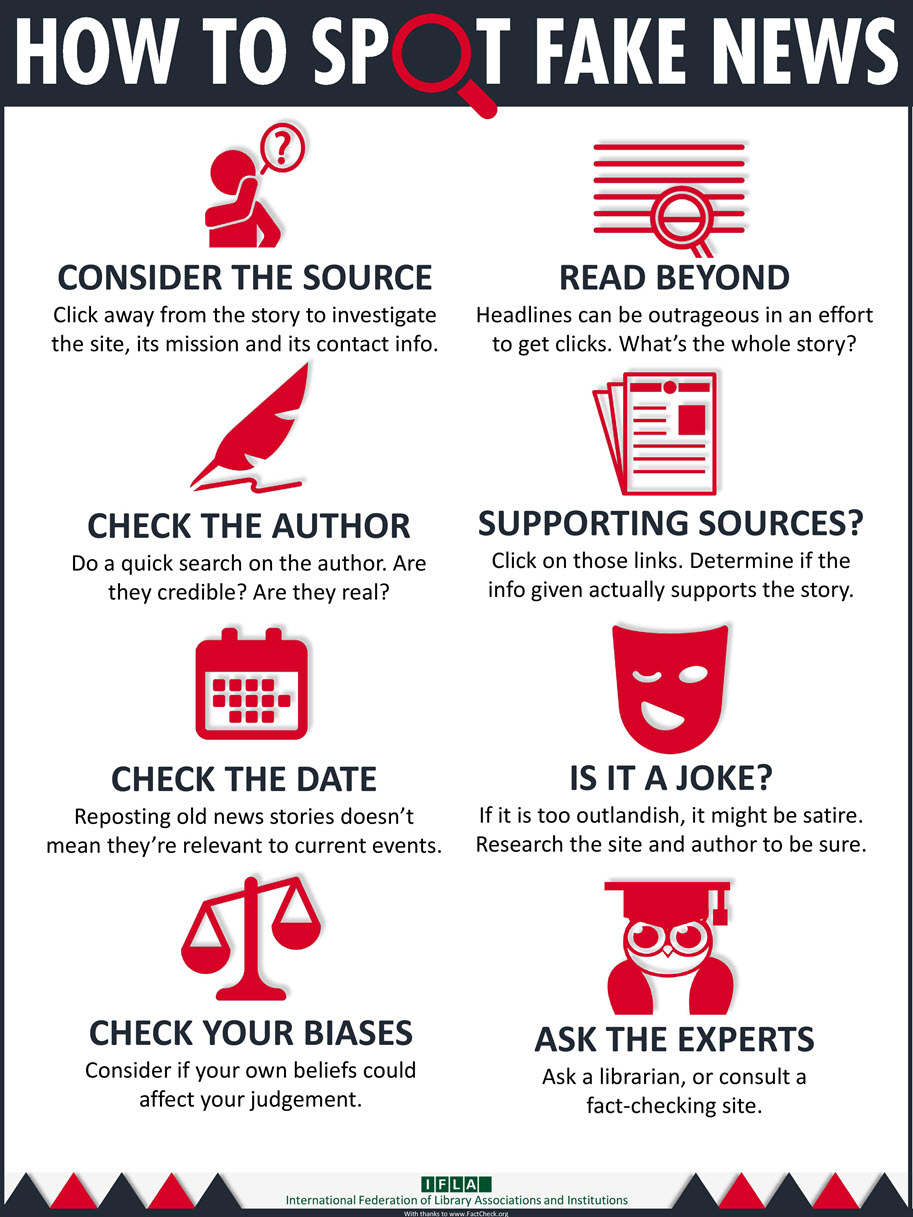
Identifying Environmental Disinformation
- Before responding to climate disinformation, you have to learn how to identify it. Below are some steps you can follow to address some aspects of climate disinformation.
- Identifying Artificial Intelligence-produced misinformation: Does the information generated align with reputable sources online (Google Scholar, peer-reviewed articles, etc.)?
- Identifying Cherry Picking: Is information shown that supports only one viewpoint?
- Identifying Doctored Visuals: Does the chart or photo look manipulated or oddly cropped?
- Identifying False Experts: Who made this? What is their motivation? This can be used to bypass the False Experts tactic from Section 2.
- Identifying Greenwashing: Is a company pretending to sell environmentally friendly products? | How to Identify Greenwashing
Learn How Other People Are Fighting Environmental Disinformation and How You Can Too
Recommendations from Scientists & Researchers
- This study aims at identifying the right approach to tackle the disinformation problem online | The role of artificial intelligence in disinformation
- Annenberg School for Communication at the University of Pennsylvania: Instead of Refuting Misinformation Head-On, Try “Bypassing” It
Recommendations from Organizations
- Environmental Defense Fund: How to fight climate change misinformation
- European Commission: Climate disinformation
- United Nations Development Program: What are climate misinformation and disinformation and how can we tackle them?
- American Psychological Association: 8 recommendations for countering misinformation
What You Can Do
- Pause before sharing. Ask who made this and what their intended purpose is.
- Ask questions.
- Fill in gaps, rather than just stating something is entirely inaccurate.
- Check the source AND the claim.
- When using AI, ask for links to articles/research that verify its claims.
- Look for information from multiple sources. Keep track of research to cross-check claims.
- Talk about it with family and friends.
Tutorials & Inspiration
Tutorials
- Rating The Best Free Drawing Apps for Beginners
- Medium Matters: A Journey Through the World of Artistic Expression
- 6 Warm-Up Drawing Exercises That Improve Line Quality
- Learn to see: Basic drawing and warm-up exercises
Inspiration
Previous Examples
Film: What They Should Have Told Us by Eliza Goodwin
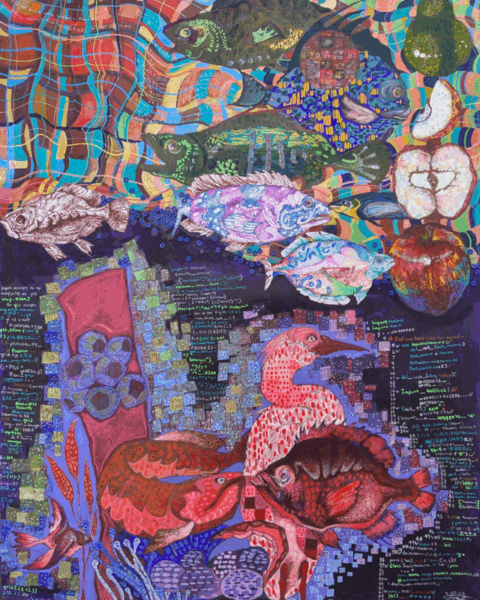
Art: Lies by Irene Raeeun Kim | Climate’s Calling! by Kennedy Kirkland | The Truth of Climate Change by Yinyi (Cecilia) Kuang | What Climate Change? by Sutra Chakma
Art (Handcrafted): Syntax Bloom by Jasper Khan | Synapse Jungle by Io Kim
Art (Digital): Climate Doomism: Let’s Make A Change Instead by Alicia Clines
Creative Writing: Convincing People Climate Change is Not Real: A How-To Guide by Elena Davis | The Myth of Climate Change by Megha Unny
Visit our Opportunities page to find more ways to stay involved in environmental conservation and creative advocacy after participating in the Contest!