The Invisible Change
Vancouver, Canada
2024, Junior, Art: Handcrafted (2024 – )
Reflection
Reflection
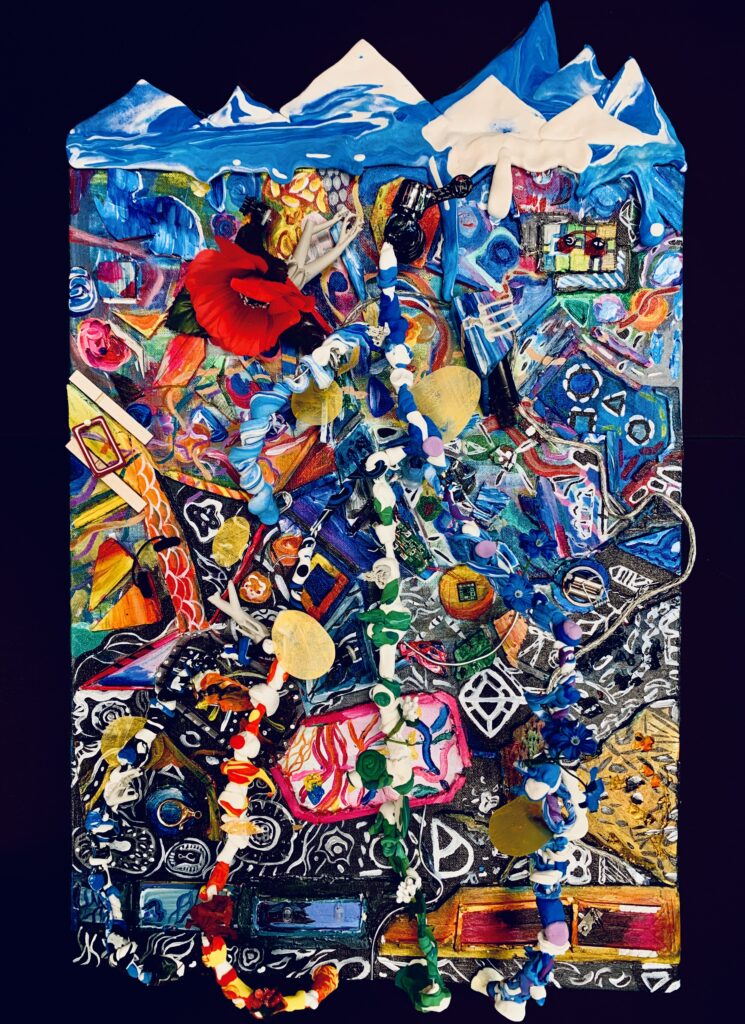
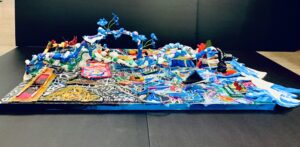
Last year, I attended the Whistler Glacier Tour, and I was astonished by such a cold, pure, and untouchable world. It is so precious and, at the same time, vulnerable. The glaciers are melting mainly due to human activities. This became the inspiration for my art. I consider my art to have different layers. At the very top of the canvas, a glacier made out of clay is slowly melting to bring out the theme. Then, we move down to the microscopic view of the water. In my imagination, it is this blizzard view of very old viruses and bacteria that can wake up from the melt. In this sense, glaciers become a metaphor for Earth’s past and history. The past is full of mystery, so I use very vibrant colors to express it. However, they are also ambiguous; there is a sense of danger represented by the transition of color into black and white. It is a question of whether we can handle the changes. The faucet represents that we have control over this situation if we are willing to change our ways of living. Thus, the water steam running from the faucet can be splendid or unpleasant. I also included the use of some daily life objects to point out that our behaviors are affecting the environment. The changes are not very visible on a day-to-day scale, but over time, they accumulate into a tricky problem that we all face. Our actions are related to the way our environments change. We need to bring nature back. We need to recognize that invisible changes such as unpredicted rain patterns, late or early blooms of flowers, floods, or droughts are all part of climate change. We need to show more gratitude to nature and adapt to a lifestyle that encourages awareness of waste and emissions.