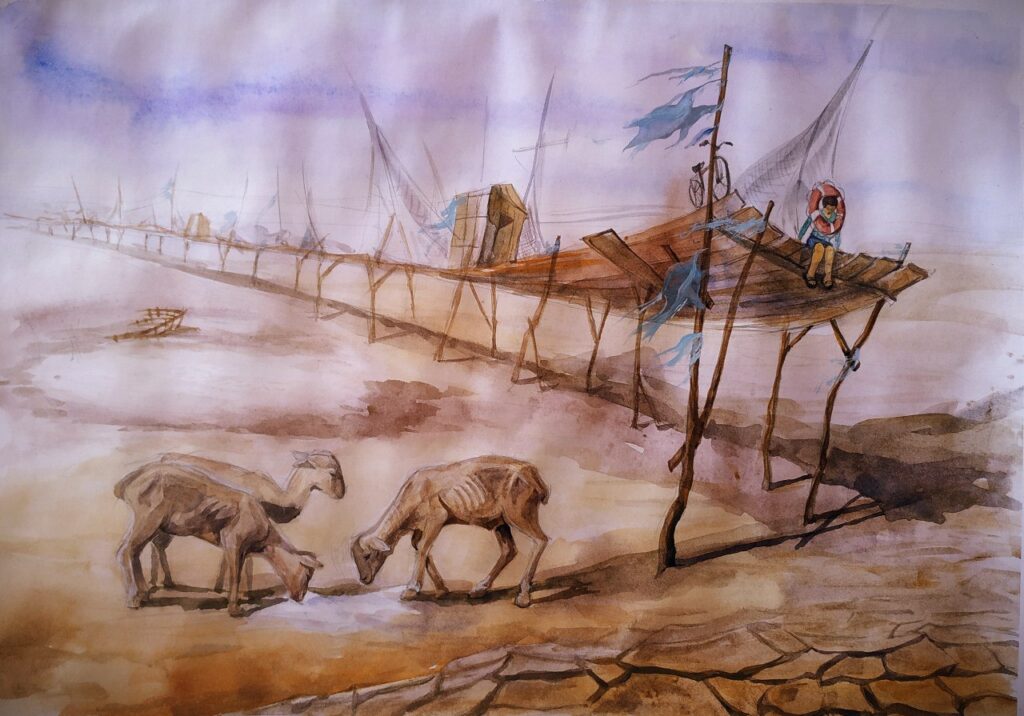
Today’s Aral Sea
Takhtakupir, Uzbekistan
2024, Senior, Art: Handcrafted (2024 – )
Reflection
The Aral Sea in Uzbekistan has been shrinking over the years due to water diversion for agriculture, leading to environmental and socio-economic consequences for the region. The living conditions around the Aral Sea have been severely affected by its shrinking size and environmental degradation. Communities in the region have faced challenges such as loss of livelihoods, health issues due to the exposure of toxic chemicals from the exposed seabed, and increased poverty. Efforts are being made to improve living conditions through various projects aimed at environmental restoration, sustainable development, and providing alternative livelihood opportunities for the affected populations. The shrinking of the Aral Sea and its environmental consequences have significant implications for the young generation in the region. They are growing up in an environment where access to clean water is limited, and the landscape is marked by ecological devastation. This can affect their health, education, and future opportunities. The shrinking of the Aral Sea has had a profound impact on the animal world in the region. Many species of fish and other aquatic animals that once thrived in the sea have either disappeared or faced severe decline due to the loss of their natural habitat. Additionally, the drying up of the sea has led to increased salinity and pollution levels in the remaining water, further endangering aquatic life. Overall, the shrinking of the Aral Sea has had a multifaceted and detrimental impact on the living conditions of the population in the surrounding areas, affecting their health, livelihoods, and overall well-being.