
Beyond Pesticides: How Fungi are the Future of Sustainable Agriculture
August 27, 2025By Stella Hong, 2025 Future Blue Youth Council member
Cover photo credit: SCID Bio-Science
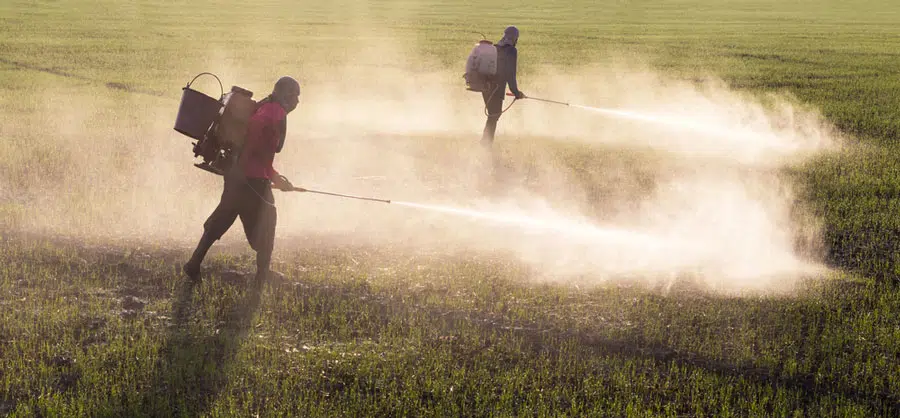
When the last bitter frost of May recedes, and warmth envelopes my town, my favorite part of summer emerges – produce. Vibrant watermelons, cherries, corn, strawberries, tomatoes, and peaches dot local markets and hang off neighbors’ trees, in seemingly endless abundance. However, these sweet prizes are not only coveted by humans, but by virulent plant pathogens. Farmers and home gardeners alike grapple with fungi that wither stalks or bacteria that coat leaves with rusty spots. To keep fruit on the shelves and in our hands, farmers have no choice but to spray pesticides on these plants.
The agricultural sector’s reliance on pesticides is dangerous for the security of our food supply, our health, and the environment’s health. But new research is exploring innovative ways to combat this problem, and the answer may be right beneath our feet.
 Source: Northwest Center for Alternatives to Pesticides
The Risk of Pesticides
Pesticides are extremely important for our food production. They can increase yields, protect plants, and allow multiple harvests of crops to be grown on the same piece of land.1 If pesticides were not used, it is estimated that there would be a 78% decline in fruit production and a 54% decline in vegetable production.2 With a growing population, it is critical to maximize crop growth.
However, the efficacy of pesticides comes at a cost. Research suggests that fungicides like Famoxadone, used on spinach, and Fludioxonil, used on peaches and nectarines, have hormone-disrupting effects.3 Herbicides like atrazine, used for corn and sugarcane, have been shown to interfere with sexual development in frogs and mice.4 Even doses within the regulatory “safe” levels of the herbicide “Round-Up” were shown to cause molecular signatures for non-alcoholic fatty liver disease.5 Women in certain agricultural communities experience higher rates of birth defects, and pesticides are among the leading causes of self-poisoning, especially in middle- and low-income communities.[1,4]
Toxic pesticide runoff can also end up in rivers, lakes, and oceans, leading to eutrophication – a process where an overabundance of nutrients leads to algal blooms, which block sunlight and consume oxygen, ultimately killing fish and plants.15 Pesticides can accumulate in birds and mammals, and kill crucial pollinators like bees and butterflies.6 Repeatedly using pesticides can also result in the emergence of pesticide-resistant organisms, which are no longer susceptible to the same treatment.6 As a result, farmers will need to apply increasingly strong doses of pesticides to kill the resistant pathogens, which will only develop more resistance, leading to a vicious cycle. Eventually, it may become so severe that pests are not responsive to any treatment.
 Source: Farmers Weekly
The Power of Fungi
However, farmers and researchers have not been blind to these issues. They have been working to innovate new methods of pest management, often embracing natural defense mechanisms found in the environment. One such mechanism can be found in the microscopic organisms right beneath our feet.
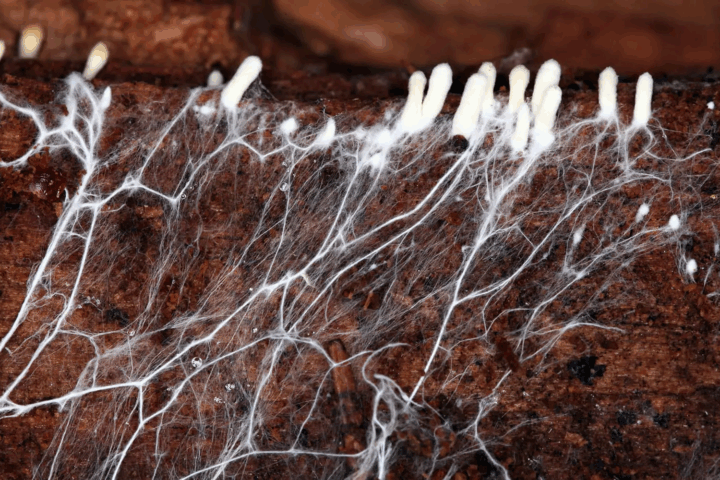
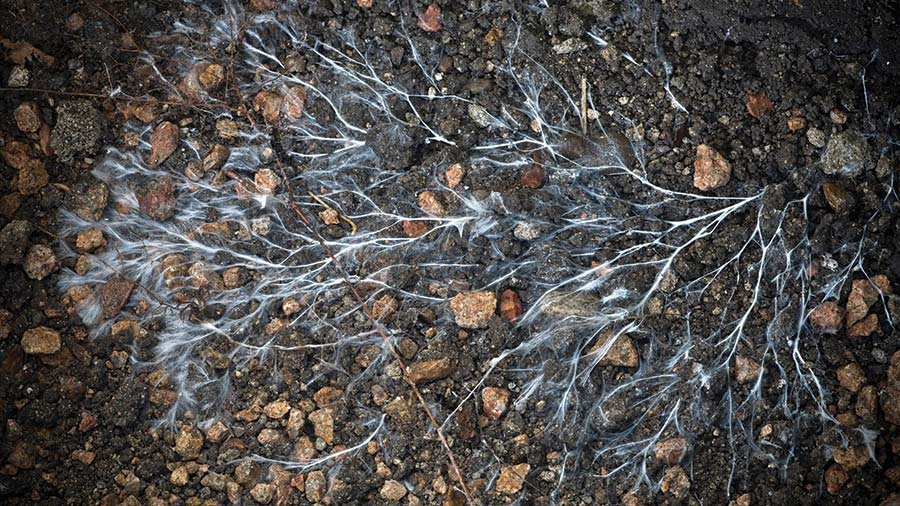
Billions of organisms called mycorrhizal fungi live in the soil and form symbiotic relationships with the roots of plants.8 Both organisms benefit from this relationship: because the fungi cannot photosynthesize, they receive the sugars they need from the plant. In return, the fungi absorb nutrients from the soil and pass them to the plants. Phosphorus, a critical nutrient plants use for flowering and fruiting, is insoluble in soil, and plants are unable to absorb it unless mycorrhizae live on their roots.8
Most importantly, mycorrhizae can help to protect plants against stressors, such as drought, soil salinity, and pathogens.11 They can outcompete pathogenic fungi and activate disease defense systems in plants, providing a sustainable alternative to conventional pesticides.10 Unlike commercial products, these biopesticides do not pollute the environment or accumulate in our food, and they have numerous benefits beyond pest management.12 Using chemical pesticides can actually kill these beneficial microbes, making the harmful effects of toxic pesticides even greater.
Many farms, such as Brown’s Ranch in North Dakota, have prioritized the health of mycorrhizal fungi across their land. In an interview with Acres USA Magazine in 2018, Brown describes the vicious cycle of pesticides, stating, “Most producers are…treating symptoms. We’re not solving a problem. Producers believe they can buy something in a jug that will take care of anything. It’s like one of these hamster wheels; they just run in circles.”13
However, like all solutions, there are some downsides to using mycorrhizae as biopesticides. Because they are living organisms, it can be difficult to have them thrive in new environments. Transporting mycorrhizae to arrive in optimal conditions can be challenging, and the costs of buying biopesticides are usually more expensive than conventional pesticides.[9,14]
But many farmers will happily accept these downsides over the alternative: a polluted world in which chemicals reside in our food and soil, where biodiversity is lost and increasingly virulent plant pathogens emerge. Ultimately, when faced with the challenges of sustainability, many people are finding that nature has already created a solution.
Works Cited
- World Health Organization. “Pesticide Residues in Food.” Who.int, World Health Organization: WHO, 15 Sept. 2022, https://www.who.int/news-room/fact-sheets/detail/pesticide-residues-in-food.
- Tudi, Muyesaier. “Agriculture Development, Pesticide Application and Its Impact on the Environment.” International Journal of Environmental Research and Public Health, vol. 18, no. 3, 27 Jan. 2021, pmc.ncbi.nlm.nih.gov/articles/PMC7908628/, https://doi.org/10.3390/ijerph18031112.
- “The Six Most Concerning Pesticides on Produce – Consumer Reports.” Www.consumerreports.org, www.consumerreports.org/pesticides-in-food/most-concerning-pesticides-on-produce/.
- Fuchs, Matt. “Are Pesticides in Your Food Harmful?” TIME, 2025 redesign, 5 June 2025, time.com/7291075/are-pesticides-dangerous-maha-glyphosate-atrazine/.
- Mesnage, Robin, et al. “Multiomics Reveal Non-Alcoholic Fatty Liver Disease in Rats Following Chronic Exposure to an Ultra-Low Dose of Roundup Herbicide.” Scientific Reports, vol. 7, no. 1, 9 Jan. 2017, www.nature.com/articles/srep39328/figures/1, https://doi.org/10.1038/srep39328.
- Sharma, Gauri. “The Environmental and Health Impacts of Pesticides.” Earth.org, 13 Jan. 2025, earth.org/the-environmental-and-health-impacts-of-pesticides/.
- “Mycorrhizal Fungi.” Www.spun.earth, www.spun.earth/networks/mycorrhizal-fungi.
- Delahaut, Karen. “Mycorrhizae.” Wisconsin Horticulture, 9 Sept. 2005, hort.extension.wisc.edu/articles/mycorrhizae/.
- Kuila, Debashis, and Somdatta Ghosh. “Aspects, Problems and Utilization of Arbuscular Mycorrhizal (AM) Application as Bio-Fertilizer in Sustainable Agriculture.” Current Research in Microbial Sciences, vol. 3, 2022, p. 100107, www.sciencedirect.com/science/article/pii/S2666517422000049, https://doi.org/10.1016/j.crmicr.2022.100107.
- Weng, Wenfeng, et al. “Roles of Arbuscular Mycorrhizal Fungi as a Biocontrol Agent in the Control of Plant Diseases.” Microorganisms, vol. 10, no. 7, 1 July 2022, p. 1266, www.mdpi.com/2076-2607/10/7/1266, https://doi.org/10.3390/microorganisms10071266. Accessed 1 July 2022.
- Malhi, Gurdeep Singh, et al. “Arbuscular Mycorrhiza in Combating Abiotic Stresses in Vegetables: An Eco-Friendly Approach.” Saudi Journal of Biological Sciences, vol. 28, no. 2, Feb. 2021, pp. 1465–1476, https://doi.org/10.1016/j.sjbs.2020.12.001.
- Prof. Dr. AMANULLAH. “Sustainable Agriculture through Beneficial Microbes: A Key to Crop Growth and Food Security.” Research Communities by Springer Nature, Springer Nature, 24 Apr. 2025, communities.springernature.com/posts/sustainable-agriculture-through-beneficial-microbes-a-key-to-crop-growth-and-food-security.
- Acres U.S.A. Editor. “Gabe Brown on Ecosystem Stewardship.” EcoFarming Daily, 15 Nov. 2018, ecofarmingdaily.com/gabe-brown-ecosystem-stewardship/. Accessed 16 Aug. 2025.
- Khan, Marzia. “AZoLifeSciences.” AZoLifeSciences, 30 June 2025, www.azolifesciences.com/article/Engineered-for-Defence-How-Modified-Microbes-are-Becoming-the-New-Biopesticides.aspx. Accessed 16 Aug. 2025.
- NOAA. “What Is Eutrophication?” National Ocean Service, NOAA, 16 June 2024, oceanservice.noaa.gov/facts/eutrophication.html.