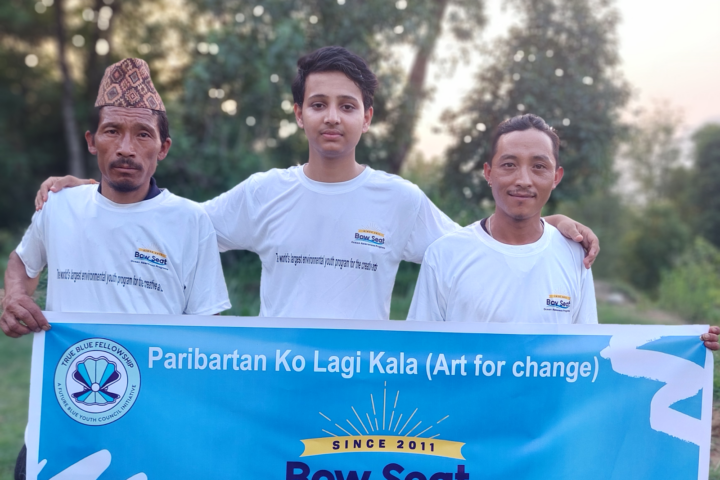
Leading Change through Art in Nepal with Bimochan Pathak
March 17, 2026By Rafael Bonilla Abad and Suhani Chadha, 2025 Future Blue Youth Council members
Cover photo by Bimochan Pathak
Every year, Bow Seat’s True Blue Fellowship empowers young changemakers around the world by providing mentorship and funding for their environmental projects. As part of the 2025 Future Blue Youth Council (or FBYC, as the cool kids say), we—Suhani and Rafael—have had the opportunity to collaborate with True Blue Fellow Bimochan Pathak on his project Paribartan ko Lagi Kala (Art for Change), in Shivapuri, Nepal.
Bimochan Pathak, observing the impact of plastic pollution on local rivers and the lack of awareness in his community, decided to take action. He approached Bow Seat saying “rural districts [in my area] lack any waste management system at all, especially plastic waste, which makes its way to waterways and soil, affecting nature and public health. … People think it’s okay to dispose of plastic waste in rivers or bury it in the soil.”
Initially, Paribartan Ko Lagi Kala was going to host workshops on traditional Nepali handcrafted goods, specifically how these can revive Nepali culture and help fight climate change. But the project evolved into something much larger: multiple workshops on traditional handcrafts, school sessions to raise awareness among youth, an entrepreneurial guide to empower students, a mural on plastic pollution awareness, and, most recently, a collaboration with the Nepal Forest Department. Watching these events unfold firsthand has been an honor for us. Projects like these are a testament to how even a little support for someone with a dream can snowball into something truly wonderful and impactful.
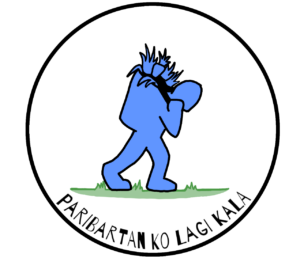
Paribartan Ko Lagi Kala’s logo. Design by Rafael Bonilla Abad
In May 2025, Bimochan led workshops that employed local artisans to teach villagers in the Shivapuri municipality how to make dokos (bamboo baskets). These are used to carry and store goods and are designed to withstand Nepali weather while ensuring comfort for their carriers. (Fun fact: The project logo shows a person bearing a doko on their back!) Later workshops by Bimochan explained the art of making taparis and dunas (plant-based plates) to villagers. Finished products quickly spread throughout Shivupari. They replaced plastic containers and plates to a noticeable degree, and there was also an unexpected benefit. Selling these products gave the villagers, especially the women, greater economic flexibility since they could have income during the agricultural off-season. To us, these efforts show how our actions can domino, so it’s important we steer that domino effect in the right direction.
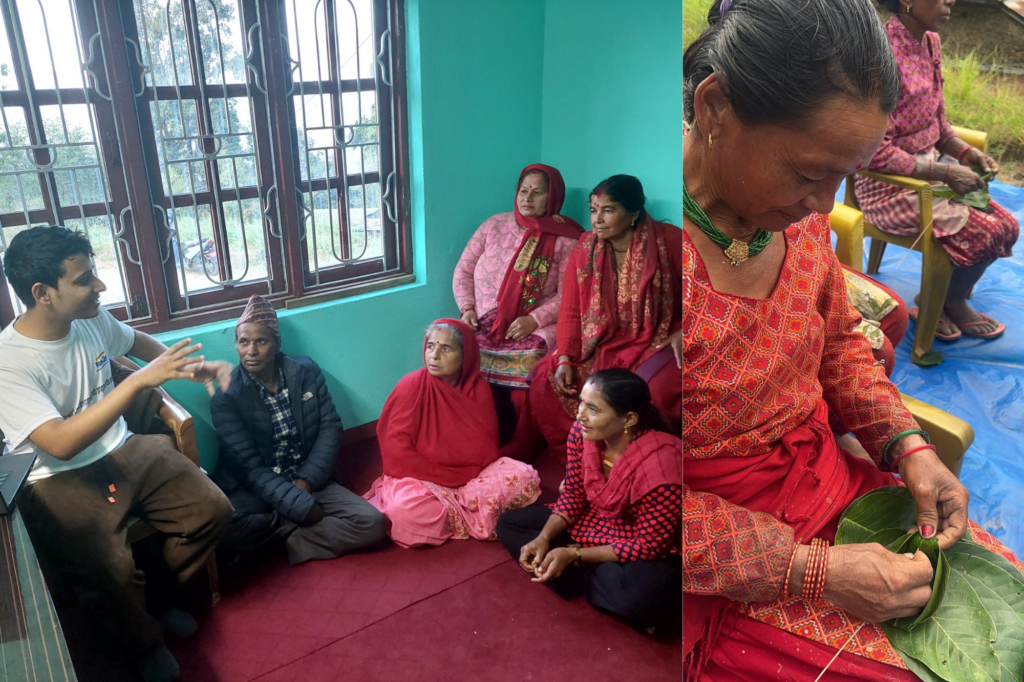 Workshops led by Bimochan. Right: Tapari workshop
Though the initial scope of the project was to hold craft-based workshops for villagers, Bimochan adapted and expanded it to host awareness sessions in schools.
Work on the school sessions required a different approach. In villages, the skills learned in the workshops could be perpetuated by elders teaching youth. However, the work done in schools was at risk of having a short-lived effect. To make a lasting impact, we collectively authored a guide on leading climate solutions in one’s community. To transmit information in a more digestible way, we included self-designed graphics. Not to toot our own horn, but we think we did a great job.
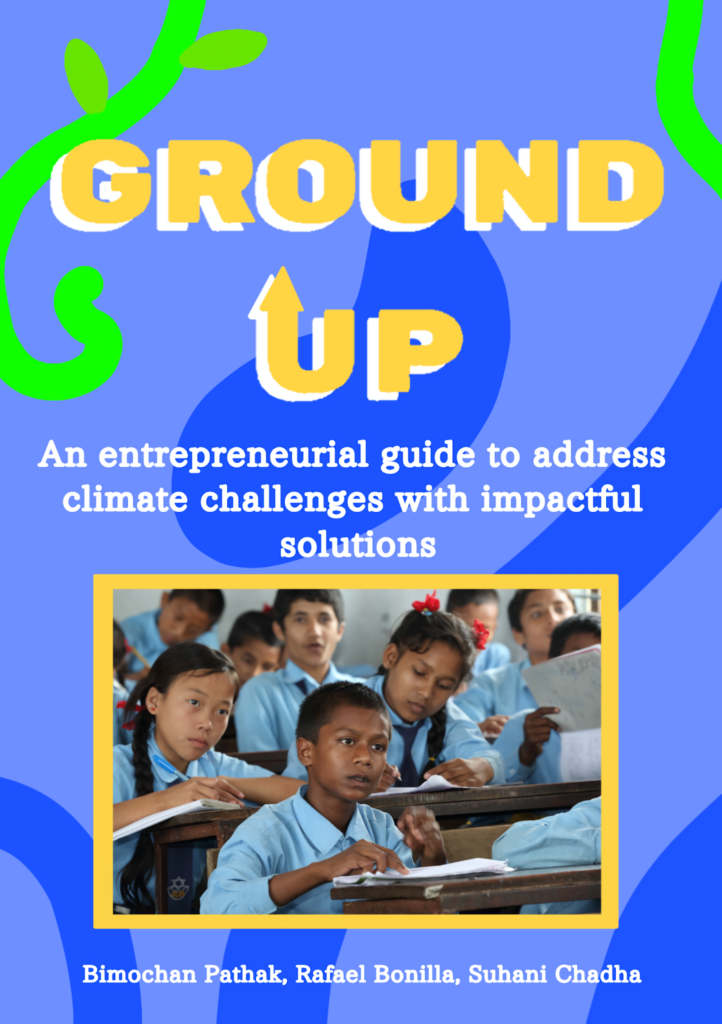 Cover of “Ground Up,” the book written for Bimochan’s school sessions. Cover art by Rafael Bonilla Abad
Everything was going according to plan, but just as the sessions were about to begin, disaster struck. The protests in Nepal turned violent, and the country was in chaos. Still, Bimochan persevered, not ceasing to plan the school sessions. And he was able to come back stronger than ever. The sessions reached over 180 middle school students. The book found a home on library shelves.
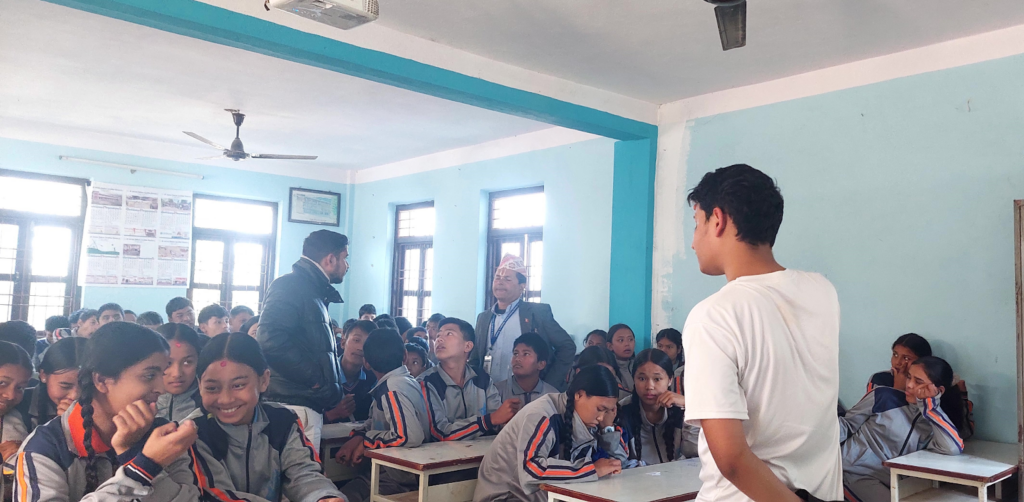
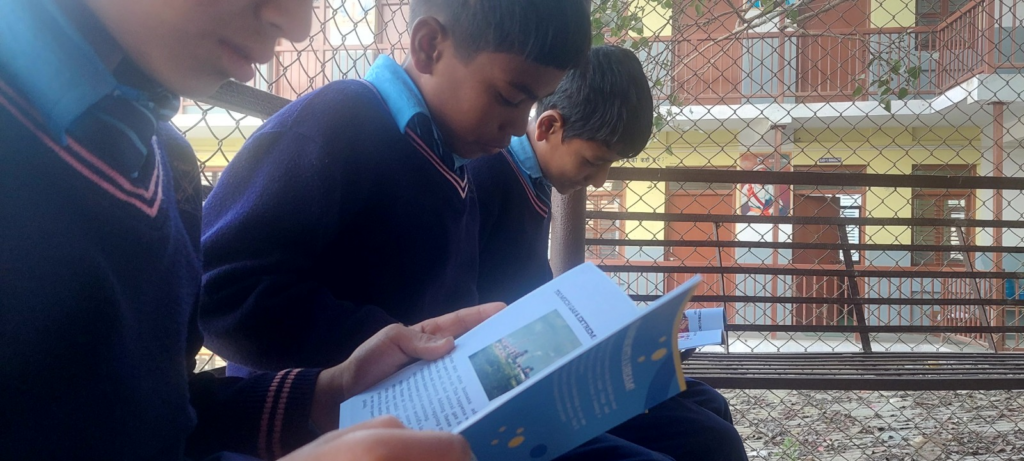 Top: Bimochan teaches the students during the school sessions. Bottom: Students read Ground Up
It’s easy to think that climate change is an issue that everyone is familiar with. We learn about it and it affects us daily; how could we not be achingly aware of its creeping hands? But some communities have been ignored, and climate change continues to lurk in the shadows, allowing it to sink its teeth into the environment without any pushback. Paribartan Ko Lagi Kala is proof that when we stop ignoring these communities, we learn how eager people are to join the fight against climate change.
Bimochan also led the creation of a mural on a wall in Shivapuri, directly opposite a public school. Collaborating with a local artist, he transformed the initial concept into a vibrant design. Even a few students joined in, adding their own strokes to the wall! In many ways, the mural stands as a culmination of everything he has worked toward this year.
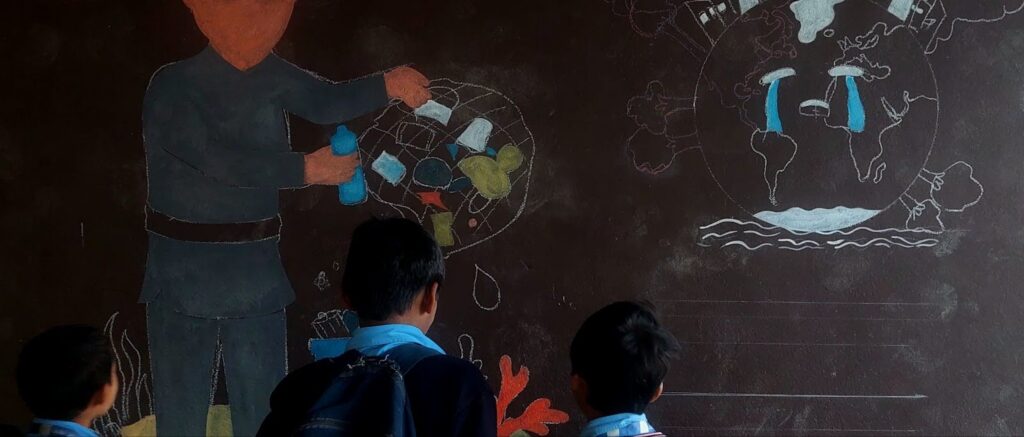
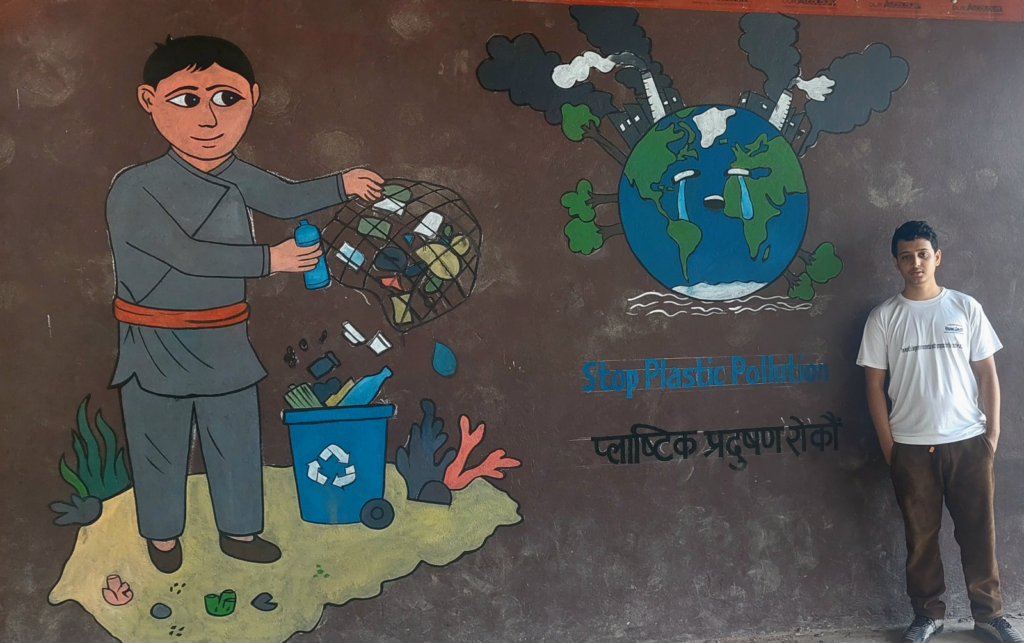 “Stop Plastic Pollution”: design by Bimochan Pathak. Top: Design. Bottom: Finished mural
Bimochan navigated organizational obstacles without the help of established guidelines or preexisting resources. He has proven that there are multiple ways to fight climate change and that hope can be more powerful than fear.
His project’s name, Paribartan Ko Lagi Kala, translates to Art for Change in English. It’s a fitting name. In only a year, Shivupari has been changed for the better – one artwork at a time. It is now our hope that the work done this year will have lasting effects. Bimochan will continue to fight against climate change, and we’re excited to see what’s to come.
The 2025 FBYC and True Blue Fellowship programming is over, but in 2026 and years to come, there will be more young change-drivers like Bimochan. Those of us participating in Bow Seat’s programming will be changed forever. There’s a saying that goes, “If you want to go fast, go alone; if you want to go far, go together.” The more we think about this quote, the more we realize its truth. If you are a young person who is interested in fighting for the environment, Bow Seat is an incredible place to start (or continue) your work.
To future FBYCs and Fellows: you’re in for quite a ride, so make the best of it.
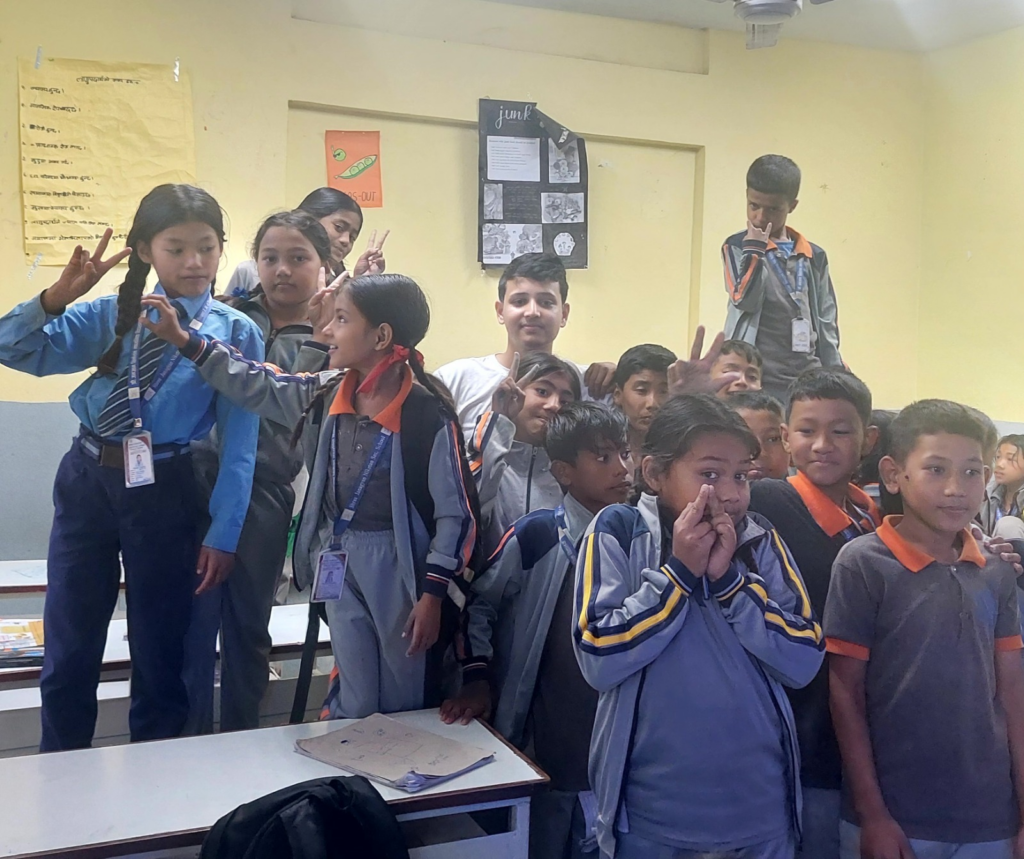 Bimochan and the students at the end of a school session