
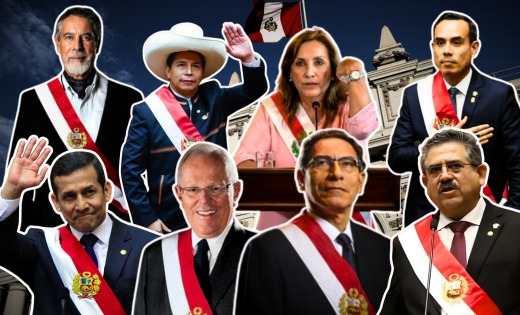
Eight Presidents, Ten Years, One Failure: Peru’s Environmental Collapse
May 7, 2026By Julio Rojas, 2026 Future Blue Youth Council member
Cover image source: https://n60.pe/peru-en-crisis-8-presidentes-pasaron-en-los-ultimos-diez-anos/
Since 2016, Peru has lived through eight presidents. From democracies, socialism, and attempts at alleged dictatorships, every political system you could imagine has ruled this nation, even for a couple of days. However, what does this political instability represent for the environment? As the leaders of the country vanish amid corruption, criminal organizations have expanded in remote regions of Peru, mostly with illegal activities such as illicit mining, destruction of rivers, mountains, cities, and thousands of acres of forests.
The weak coordination between politicians and law enforcement has weakened commitment to comply with international regulations regarding the sustainable growth of mining in Peru. This has led to an almost complete abandonment of pollution regulations in this sector. This was clear in the 2020 protest, where the focus was entirely on what was happening in Lima, leaving other regions, especially the Andes, with the mining sector out of the equation of importance.
As attention tended to focus only on Lima, massive illegal mining operations began in the Peruvian Andes and forests, destroying more than 139,000 hectares of green spaces and spreading across nine regions of Peru (Finer, 2025). As a secondary effect, this has caused mercury pollution in rivers and cities, resulting in harm to various native populations in these areas as well as in nearby urban communities. This situation persisted due to the government’s systemic failure to ensure proper mining regulation in the country’s remote regions.
Moreover, with this door open for illegal mining, other illicit actions have risen with it, including informal labor, human trafficking, human slavery, deforestation, water contamination, and mercury release. These actions show that this is not an isolated case, but an interconnected governance failure. And the environmental degradation of Peru is driven by the institutional fragility that has weakened the state’s capacity to regulate, enforce, and protect its natural resources.
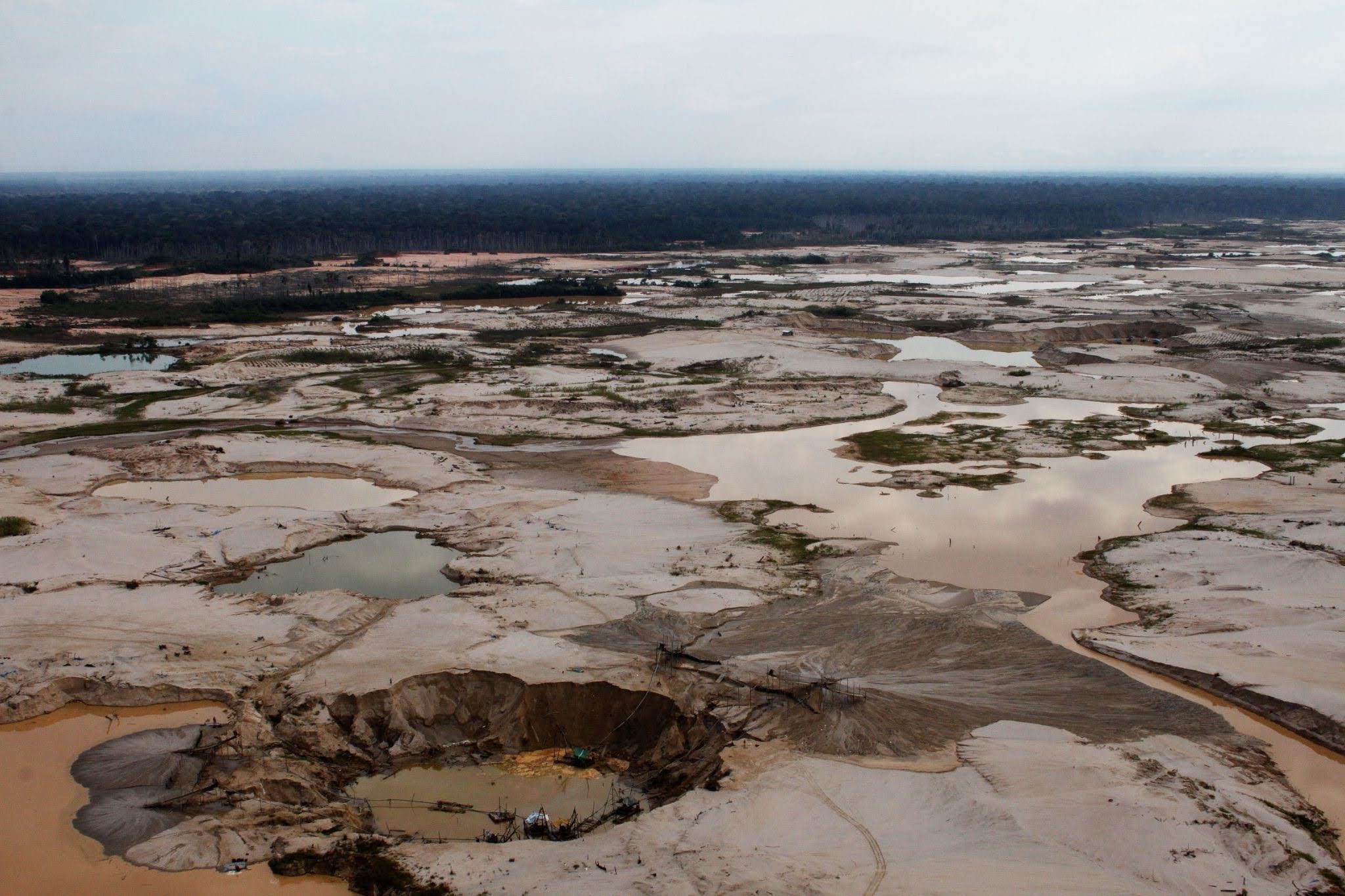 Image source: https://www.flickr.com/photos/prensapcm/14868422253
Works Cited:
Asencios, M. (2013). Registro de Documentos. Congreso.gob.pe. https://www2.congreso.gob.pe/sicr/biblioteca/Biblio_con.nsf/999a45849237d86c052577920082c0c3/44B49A2C474AFD0505257C2100585BF1/
Elliott, L., & Siniawski, N. (2026, February 19). Peru installs Jose Balcazar as interim president after Jeri ousted in political upheaval. Reuters. https://www.reuters.com/world/americas/peru-congress-elects-jose-balcazar-new-interim-president-2026-02-19/
Finer, M. (2025, September 29). MAAP #233: Current situation of gold mining in the Peruvian Amazon – MAAP. MAAP. https://www.maapprogram.org/gold-mining-peru-amazon/
Koele, M. (2025). Supporting the green transition: OECD Economic Surveys: Peru 2025. OECD. https://www.oecd.org/en/publications/oecd-economic-surveys-peru-2025_76f6eb73-en/full-report/supporting-the-green-transition_0cbb0369.html