
Gwenan Walker: An Artist’s Quest in Telling and Retelling Climate and Environmental Stories with Folklore
July 23, 2025By Keren-happuch Garba, Bow Seat Alumni Advisor & 2024 Future Blue Youth Council member
The Alumni Spotlight Series is a celebration of Bow Seat’s alumni as they continue to make waves in the world. This series aims to highlight their journeys, showcase their creative and environmental work, and inspire our Bow Seat community with stories of impact and growth. Readers can expect monthly insightful interviews, personal reflections, and updates on how these young changemakers are using art, advocacy, and innovation to shape a more sustainable future.
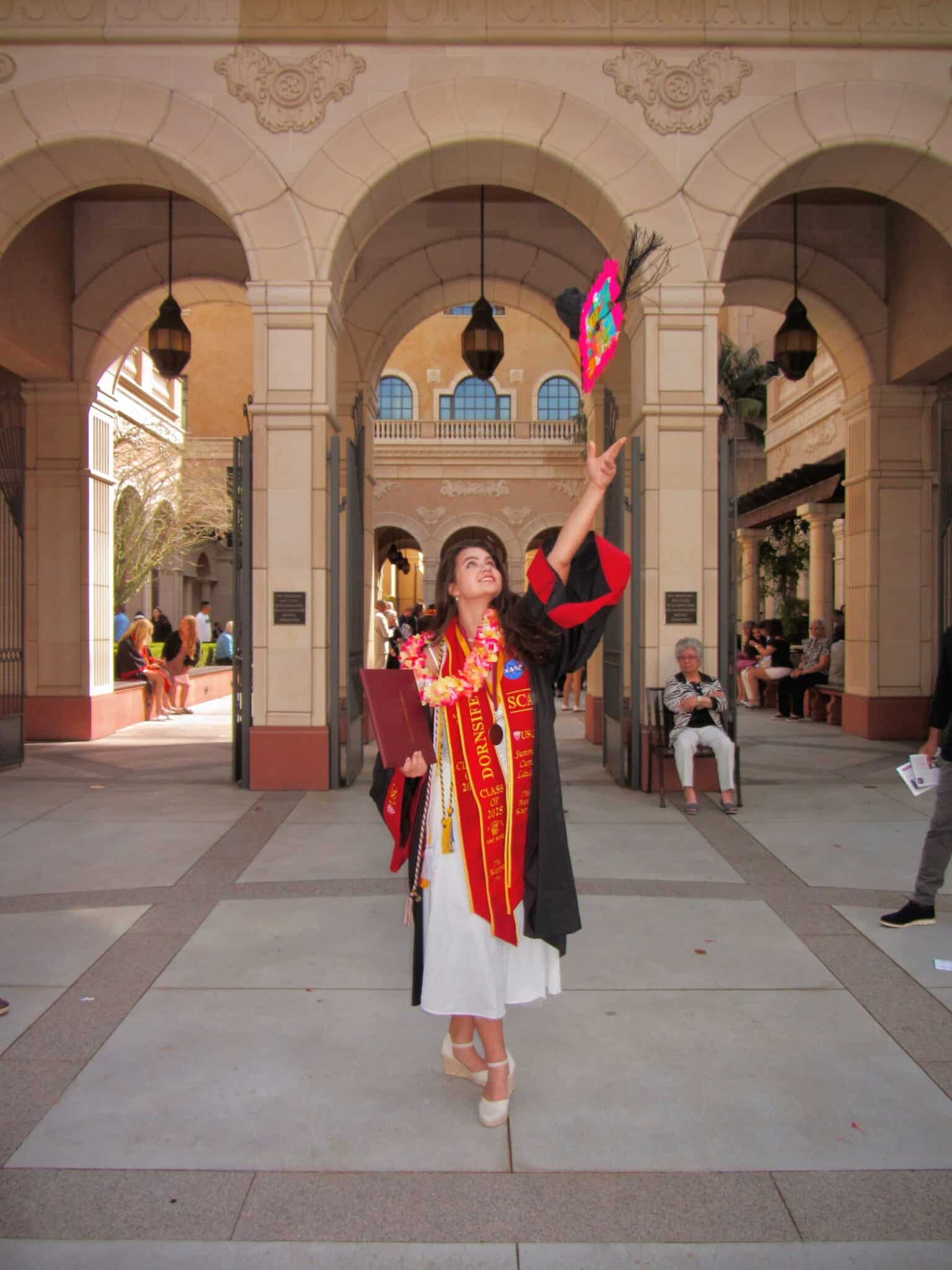
Gwenan Walker is a recent graduate of USC’s Animation and Digital Arts Program through the School of Cinematic Arts (with a minor in Marine Biology to remain consistent to form). She is currently a part of Bow Seat’s True Blue Fellowship for her arts-based charity Creating For Change, and has been finding ways to combine her love for the arts and sciences over her time in undergrad with internships at USC’s Wrigley Marine Institute and NASA.
Below is our transcribed conversation:
What environmental or social issues are you passionate about?
Much of my work revolves around utilizing folklore to tell a familiar story in a new and poignant way, particularly if that story can be twisted towards climate change and environmentalism. As someone who is half Slavic and half Irish growing up in America, I didn’t have much access to my cultural heritage or familial background at all, and have spent an extensive amount of my time relearning that lost knowledge. Through it, I have found that many folk tales from my cultural heritage – and the folk tales of nearly every culture in the world – are inextricably linked to nature and the importance of maintaining a proper balance in the natural order of things. While most of my art revolves around preserving biodiversity, it can also delve into certain endangered species or ecosystems (with a hard leaning preference towards aquatic life from me, of course!).
What sea creature are you most similar to and why?
That’s a tough one! From my time volunteering out at the Marine Mammal Care Center in San Pedro, I’ve found baby elephant seals (emphasis on baby, they become HUGE and a lot less cute grown up) to be incredibly relatable. Even as babies, they’re enormous balls of blubber with these huge, doughy eyes (and people often tell me that my eyes are pretty large!). We had one baby (I secretly nicknamed him Marshmallow Man because of his chunky size and light coat) who refused to go in the water or practice hunting fish, simply because he knew he would eventually get fed anyway and would rather spend his time napping in the sun. That’s about as relatable as it gets, I think.
How did you get introduced to Bow Seat, and what activity did you participate in during your term at Bow Seat?
I believe that my AP Art teacher back in high school was the first to introduce me to it, knowing that a lot of my work already delved into mostly aquatic themes. Since winning the gold prize back in 2019, I have also served as an alumni judge for the past several years and was the recipient of the Bow Seat True Blue Fellowship in 2024.
You won a gold prize in the 2019 Ocean Awareness Contest for your brilliant piece “All That’s Left”. What message did you hope to pass, and does this reflect your current work as an artist?
My piece “All That’s Left” was in some ways a reference to one of many trips I had taken to the Metropolitan Museum of Art. The Hellenistic Greek “Head of a Youth” sculpture, which is neatly cleaved down the middle horizontally, was one of my biggest inspirations as I began to explore the process of information and culture lost over time, and how it is often only seen as a natural progression when looking towards the past, not the future. Inspired by underwater sculpture exhibits that already exist for scuba diving adventurers, my artwork lays out our future as if humanity were being examined as an insignificant illustration in a scientific research journal, with every trace of our existence already overgrown and damaged beyond recognition due to climate change.
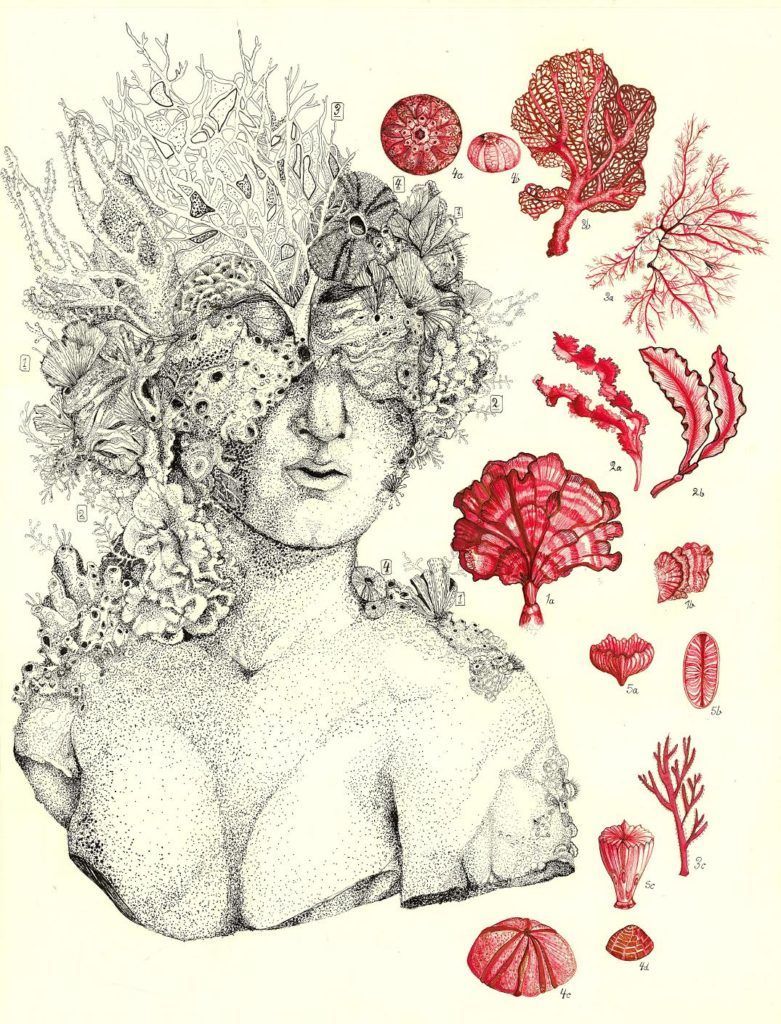 “All That’s Left” by Gwenan Walker, 2019
You were a True Blue Fellow in 2024 for the project “Creating for Change”, which combined the power of storytelling and culture to motivate environmental advocacy. How has the project impacted you and others?
It’s been a roller coaster in terms of developing my project management skills! My project is focused on selling my folklore-based work that tackles environmental or sustainability issues and donating a portion of the sales to organizations and charities working to combat them. As a result, I’ve had to get a better grasp on everything related to managing a small business, from website design to e-commerce, social media promotion, and project collaboration. I’m going to be launching my website later this month, hopefully, so it’s yet to impact too many other people, but it’s been an incredibly challenging and rewarding experience thus far.
In what ways has Bow Seat impacted your life and career?
If there ever was a defining moment in my life where I realized my art had the power to create change through storytelling, my first introduction to Bow Seat was likely that inciting moment. I grew up in the 2010s at a time when young women and girls were being strongly encouraged to explore careers in STEM, and my attempts to discover my career path in high school were both exhilarating and disheartening as a result. While I explored my love for the biological sciences to the fullest extent – delving into marine biology, evolutionary biology, and anatomy as much as I could – there was a distinct attitude where I grew up that to take my experiences with STEM and choose art over it would be a waste of both time and money. My time with Bow Seat laid the foundation for a career in which my art felt valued and seen by others, in ways that could be impactful towards the very STEM fields I had fallen in love with. It feels like a silly and obvious conclusion now, but art CAN change minds and hearts and, subsequently, maybe even change the world.
Since your term at Bow Seat, how have you made a difference in the world around you?
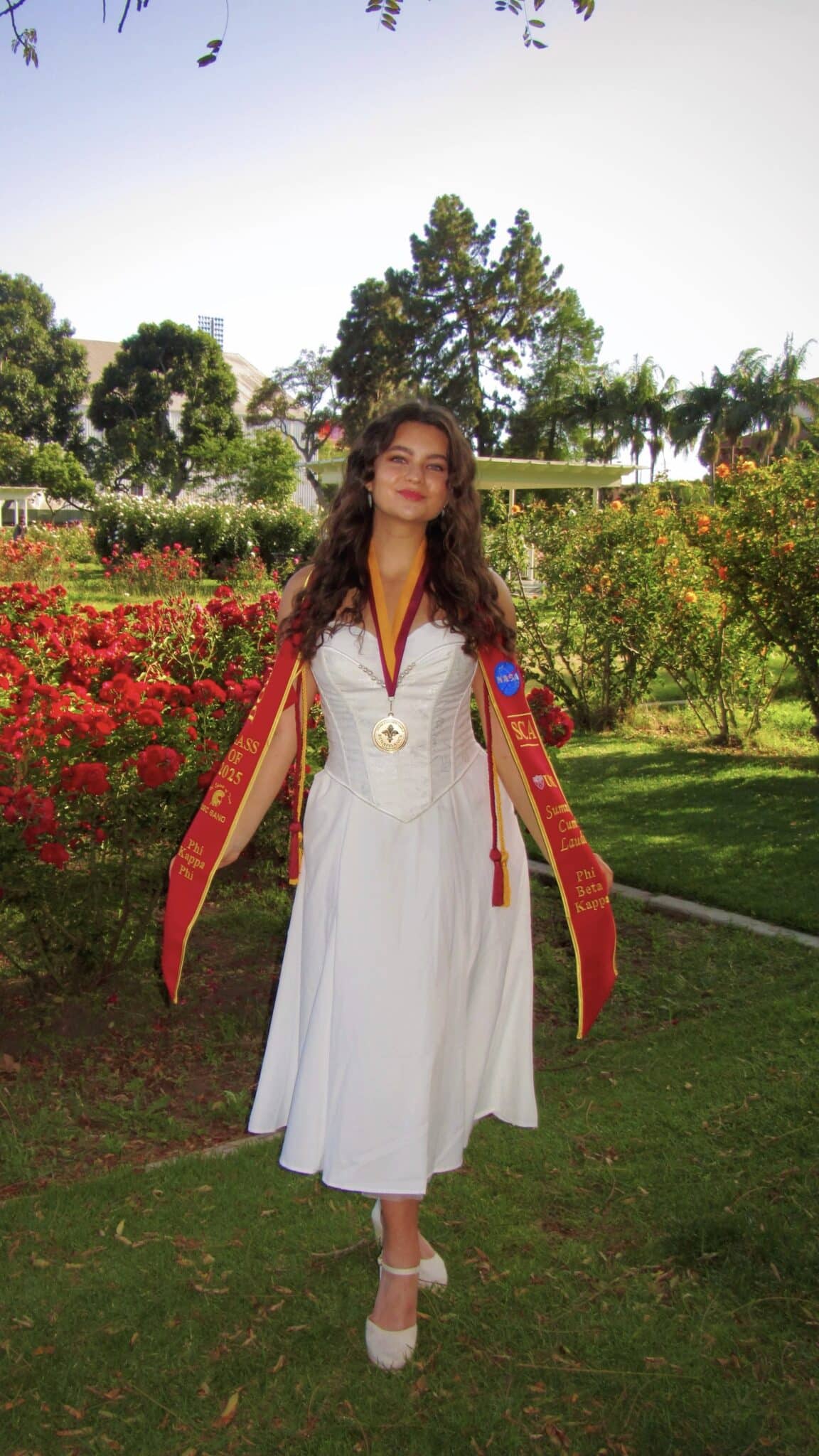
Unfortunately (or perhaps fortunately?), most of my time during and following Bow Seat has had to be dedicated to my undergraduate work as an animator and concept artist in the movie industry. While much of my work as an artist still revolves around traditional art and painting, my career endeavours have opened me to advocacy through film, with two animated short films currently in the works that I am independently directing and producing. Both fields of artwork have led me to a myriad of opportunities in college that I hope have helped to better the world around me, such as collaborating with NASA to create media for their recent Psyche Mission, collaborating as a visual communications intern at USC’s Wrigley Marine Institute, and working on an upcoming children’s book rooted in Celtic mythology that will expose younger generations to better understanding climate change and sustainability.
What advice would you give to young people in ocean conservation?
Sometimes it’s better to collaborate with others than to strike out alone! As someone who has always struggled with asking for help and feeling that I could not rely on others for support, most of my work in ocean conservation has been a pretty solitary endeavour. While this has taught me plenty of valuable skills and lessons in advocating for myself and others, in the face of a threat as unavoidable – and frankly, terrifying – as climate change, I think I could have used a strong community of like-minded people sooner. I was eventually able to find this through Bow Seat and the organizations that I was a part of in undergrad, such as USC’s Arts and Climate Collective, and I would recommend young activists do the same and find their community. It makes tackling a challenge of this magnitude just a little less daunting.