How Schools Breed Indifference and Silence Student Action
April 29, 2026By Isidora Popović and Nathália Soares Mansi, 2026 Future Blue Youth Council members
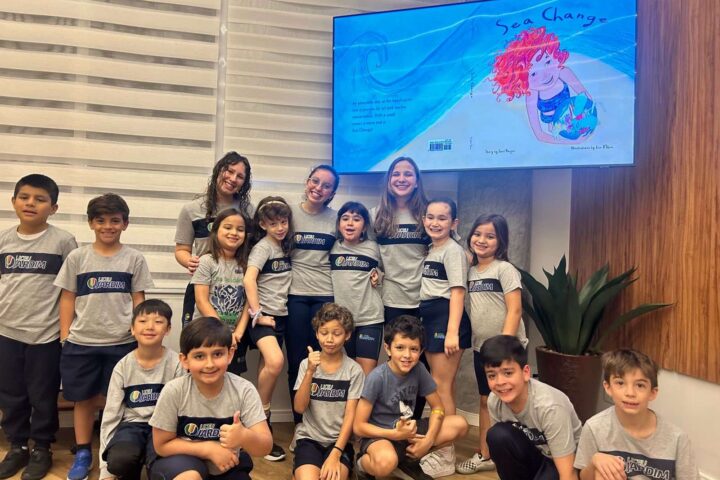
Cover image: Nat’s school environmental club presenting a nature-themed book for children.
We live in a society where many students feel disconnected from global challenges — as long as these issues don’t touch their own neighborhoods. While not everyone shares this detachment, there is a widespread trend to prioritize personal goals and ambitions over collective efforts like protecting our planet. Meanwhile, the Earth is deteriorating — its ecosystems corroding and smoldering — while vast resources are funneled into weapons, steering humanity toward a self-made path of extinction. The question is: is this because of a lack of opportunities, or is there a different reason?
Based on our research, it’s not because of a lack of opportunities.
In fact, the landscape for youth engagement has never been richer. From digital classrooms to global advocacy networks, passionate students today can plug into movements that match their skills, values, and creativity — often with no barriers to entry. Take YOUTHTOPIA, for instance: a free, online learning platform hosting over 150 courses focused on changemaking, leadership, and social innovation. Then there’s Climate Cardinals, a youth-driven nonprofit that mobilizes volunteers worldwide to translate climate science into more than 100 languages, making vital research accessible across borders.
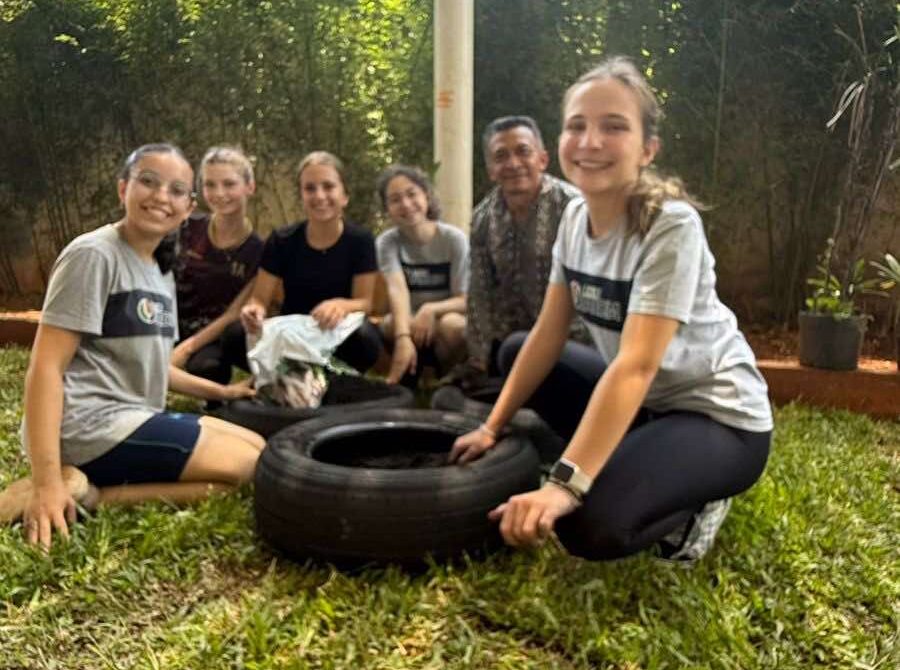 Nat’s school environmental club building their garden.
Given what we now understand about youth empowerment and the transformative power of education, one might expect today’s students to be more conscious and proactive than any generation before them. After all, we’re surrounded by tools that can connect, inform, and mobilize in seconds. Schools, as the foundational spaces of learning and growth, should be at the heart of this awakening — cultivating not just skilled workers, but compassionate citizens equipped to heal a fractured planet. Yet too often, our global education systems do the opposite: they prioritize standardized testing over critical thinking, competition over collaboration, and rote memorization over real-world relevance.
As a result, many young people today appear indifferent to the world’s most pressing crises — not because they lack empathy, but because empathy has not been invited into the classroom. They’re rarely taught to see themselves as part of a global community, to feel solidarity with a child breathing toxic air on the other side of the planet, or to recognize their own agency in reversing climate collapse. They aren’t shown how a single idea, a creative solution, or a sustained effort can ripple outward and spark change. And so, disconnection grows — not from apathy, but from absence. The absence of a curriculum that centers sustainability, justice, and emotional intelligence. The absence of spaces where students can explore their role in healing ecosystems and building equitable societies.
As the Senegalese environmentalist Baba Dioum profoundly said: “In the end, we will only conserve what we love; we will only love what we understand; and we will understand only what we are taught.”
If students are not being taught to care, what are they being taught?
They’re taught to measure success in grades, not in impact.
To chase individual achievement, not collective thriving.
To accept the world as it is — rather than imagine and build what it could be.
Faced with an exam on unfamiliar material, the instinct isn’t to seek understanding, but to survive: cram facts, exploit shortcuts, and memorize just enough to pass. The deeper questions —Why does this matter? How does this connect to my life or to the world? — are pushed aside in the race against the clock. In this environment, the natural joy of learning — the curiosity that once lit up childhood — gets buried beneath stress, sleepless nights, and the weight of expectations.
This isn’t just about exams. It’s a toxic cycle, reinforced by families striving for stability, schools judged by test scores, and universities flooded with applications. Students become trapped in a relentless rhythm: finish one assignment, chase the next deadline, complete the project, repeat. Their vision narrows to short-term wins — grades, rankings, admissions — while the broader purpose of education fades into the background. Output is celebrated; growth is overlooked. A high score is hailed as mastery, even if the knowledge evaporates the day after the test.
In the process, something essential is lost: the time and space to experience, to explore, to grow. Education, at its best, should be a journey of discovery — of ideas, of self, of interconnectedness. Every question asked, every challenge faced, every moment of struggle is a step forward. And yet, in today’s climate, even progress feels invisible unless it’s stamped with a letter grade.
Why does this happen?
Because we live in a culture of immediacy — one shaped by instant replies, rapid results, and visible metrics of success. We’ve come to treat time like a resource to be optimized, not honored. Reflection is seen as inefficiency. Curiosity without a clear payoff feels like a risk. In this world, experiences become disposable, and a grade becomes the only accepted receipt for effort — proof that you were here, that you tried, that you’re “smart.”
But real learning isn’t transactional. It’s transformative.
And real intelligence isn’t measured in percentages — it’s seen in the courage to keep asking questions, to sit with uncertainty, and to care enough to seek solutions that matter.
The irony? The very skills this system claims to reward — critical thinking, creativity, resilience — are stifled by the pressure to perform. Meanwhile, the students who thrive aren’t always the ones who understand the most; they’re the ones who’ve mastered the game.
But what if we redesigned the game?
What if schools celebrated not just the answer, but the inquiry? Not just the grade, but the growth?
Because when students are given the space to learn with purpose — to connect their education to real-world challenges, to their values, to their communities — something shifts. They don’t just memorize. They engage. They don’t just perform. They transform.
And that kind of education doesn’t just prepare students for tests. It prepares them for life.
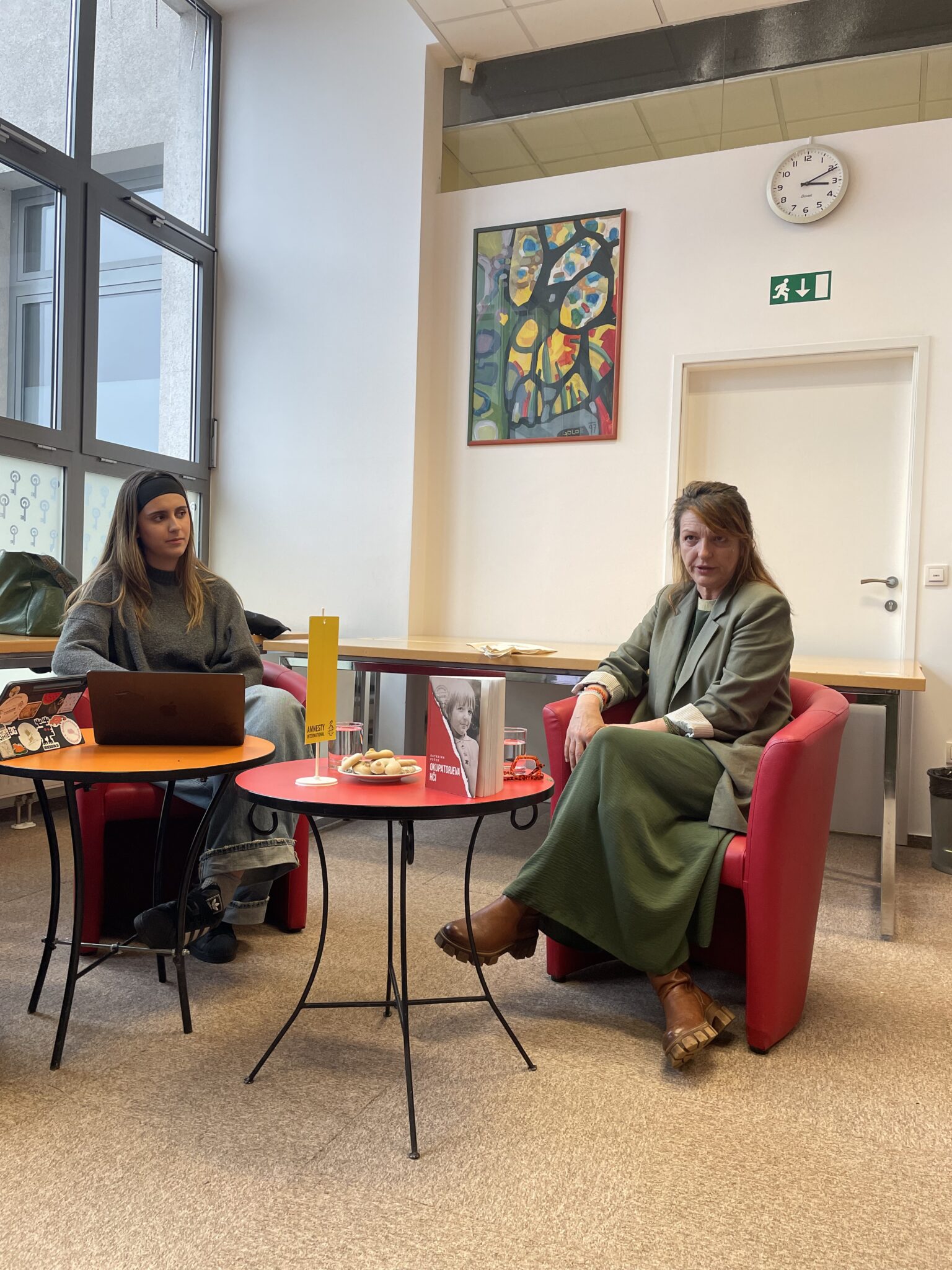 Isidora hosting a literary event at her high school, leading discussions on human rights violations and raising awareness.
From a psychological perspective, the way students engage with school systems often reflects what’s known as a telic mindset — a goal-oriented approach centered on achieving specific, finite outcomes: the next grade, the test score, the college acceptance. In this framework, every task becomes a means to an end, and the journey of learning is overshadowed by the urgency of reaching the destination. While this mindset can drive high achievement, it often comes at a cost: chronic stress, burnout, and a sense of emptiness once the goal is reached. After all, what happens after the A+ is earned or the competition won? Without a deeper sense of purpose, the victory can feel hollow.
In contrast, an atelic mindset offers a more sustainable and fulfilling alternative. Here, the focus shifts from chasing outcomes to valuing the process itself — engaging in activities not just for what they produce, but for the meaning, growth, and connection they foster in the present moment. When students approach learning with this mindset, they’re not just completing assignments; they’re exploring ideas, asking questions, and aligning their work with passions like environmental justice or human rights. The act of creating change — whether through a climate project, a community art piece, or a peer-led workshop — becomes meaningful in itself, regardless of external validation.
This is where education can transform from a race to a journey. An atelic approach doesn’t reject goals; it repositions them. Grades and achievements may still exist, but they’re no longer the sole measure of worth. Instead, students learn to find fulfillment in curiosity, in collaboration, in small acts of courage and care. They begin to see that protecting the planet or standing up for others isn’t something to be postponed until they’re “qualified” — it’s something they can live into, right now, one intentional step at a time.
By nurturing atelic engagement, schools can help students avoid the emotional crash that follows burnout and instead cultivate resilience, creativity, and a lasting sense of purpose — because when the journey matters as much as the destination, every step forward becomes its own reward.
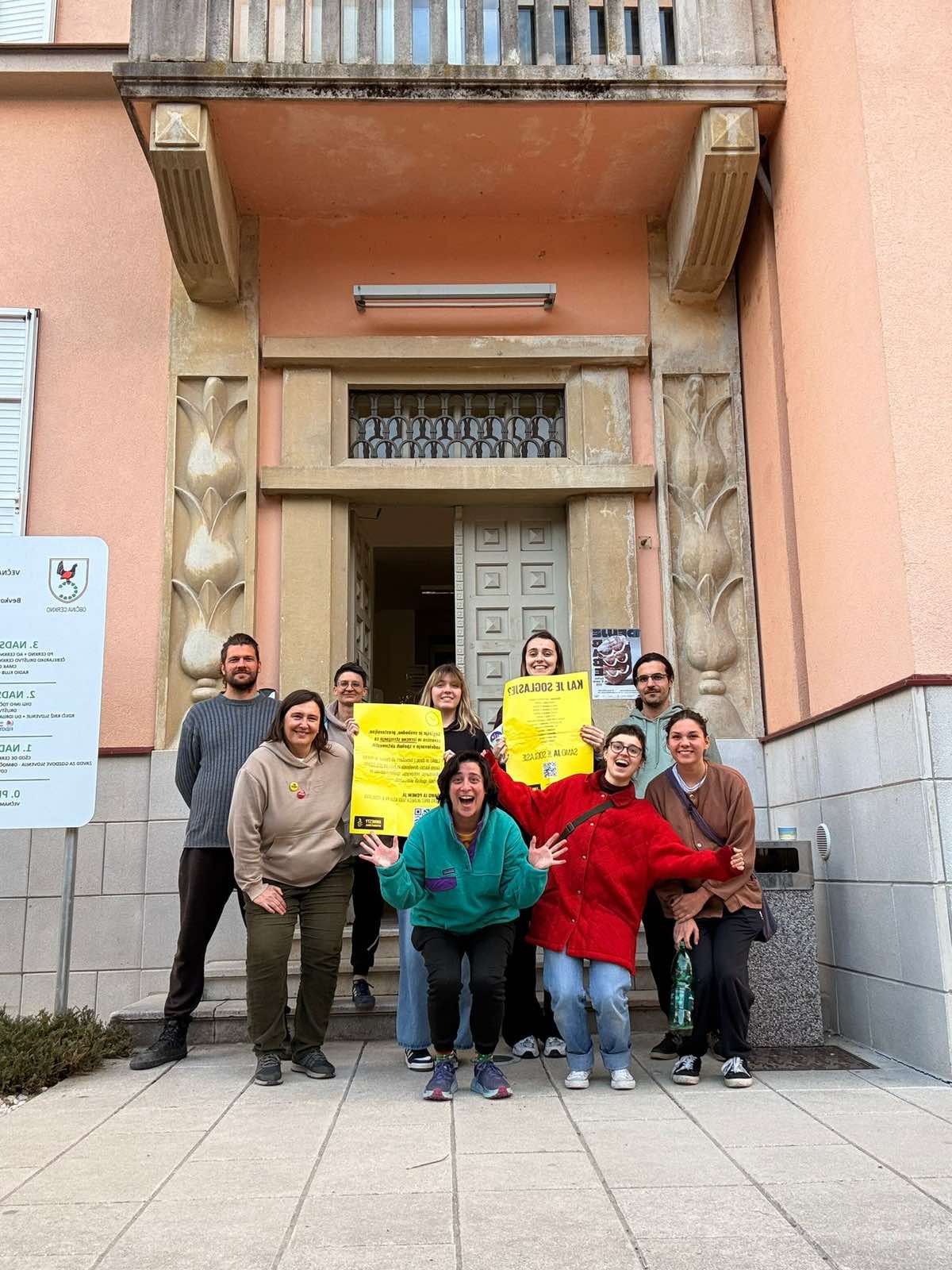 Isidora co-hosting a workshop in a rural area of Slovenia, educating participants on consent and the importance of “yes means yes.”
In light of the 2026 Olympics, this mindset was vividly demonstrated in practice. Alysa Liu, an American ice skater, won gold — but her victory felt less like a traditional triumph and more like a quiet revolution.
Once a perfect example of how burnout and relentless pressure can drain passion and love for one’s craft, Alysa’s journey is remarkable. At just 16, overwhelmed by expectations, she stepped away from skating after the 2022 Beijing Olympics, choosing a more ordinary life over the relentless pursuit of perfection.
During this break, while exploring other interests, she rediscovered her love for ice skating. When she returned at twenty, it wasn’t to reclaim titles or meet external expectations, but simply to express her artistry and passion for the sport. She no longer defined herself solely as an athlete; instead, she learned to connect deeply with her performances without attaching her self-worth to their outcomes. Each time she took to the ice, it became an act of joy rather than judgment, and every mistake was embraced as proof of effort and persistence.
By protecting her peace and setting boundaries, Liu reshaped her relationship with skating on her own terms. This story resonates far beyond sports — it offers a powerful lesson for all areas of life, including activism, where progress often feels slow and uncertain. In such contexts, this “art of detachment” can be vital. Rather than tying our identity to visible success, detachment allows us to stay committed to the cause while releasing the pressure to “fix everything” all at once.
As Alysa said, “What is there to lose? Every second you’re there, you’re gaining something. There is nothing to be lost.” By caring deeply without becoming overwhelmed by results, we can protect our mental well-being and remain engaged for the long haul.
The school system cannot be changed by the students themselves. Especially now, in our society, there is a clear barrier between youth and authorities, indicating clearly who has the upper hand. However, this does not necessarily mean that we are hopeless — even if it’s going to take years to change the entire system, there’s something to be done now. We must help students find their own ways to contribute through community-led projects while we — organizations, governments, and families — bring about this systematic change one classroom at a time, through advocacy campaigns and adequate funding.
Students passionate about hands-on environmental action can join the Student Environmental Ambassador Program, a student-led initiative that equips young activists with ready-to-launch projects and resources. Global changemakers can also explore UNICEF’s wide range of youth volunteering programs, operating in communities around the world. For those inspired by local action with global vision, Mission Green Global offers an Environmental Chapters Program that empowers youth to lead sustainability projects in their communities. And for the creatively inclined, Bow Seat invites students annually to participate in its Ocean Awareness Contest, blending art, poetry, and film to inspire ocean conservation. Together, these platforms prove that no matter your passion — be it science, art, or community organizing — there’s a place for you in the movement for a better world.