Megaphones, Not Ghostwriters: A Hike from Waste Mountains to GEEF 2026 – “Time for Action: Emerging Technology & Global Solidarity”
April 23, 2026By Jina Song, 2025 Future Blue Youth Council member
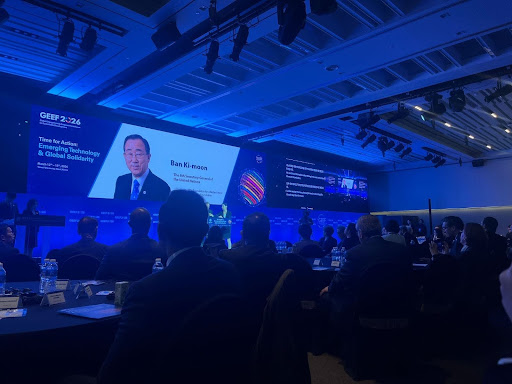
On March 12-13th, we hiked over our school mountain and into the 8th Global Engagement & Empowerment Forum on Sustainable Development (GEEF). Co-hosted by Yonsei University and the Ban Ki-moon Foundation, it’s a microcosm of global intellectual power and leadership.
Clad in formal attire to close decades of age gaps, student representatives across EnvoNomics (environmental economics), WWF club, Model UN, and Greener is Cleaner watched as the architects of the UN 2030 Agenda took the podium. With only four years left on the clock, our atmosphere was a pressurized mix of urgency and visionary strides. We sat behind the former United Nations Secretary-General, representatives from the Presidential AI Council, diplomats, and presidents, tech leaders, including Google, and scholars from Yale to KAIST.
The commitment of Ban Ki-moon was resounding. As the Secretary-General who kick-started the UN Sustainable Development Goals (SDGs) back in 2015, his vision remained clear. “’Leaving No One Behind’ must be the cornerstone of every innovation.” His words pushed us to peer beyond technical specs and zero in on protecting human dignity worldwide.
The Kyrgyz sector of KFHI (Korea Food for the Hungry International), also known as Korea Friends of Hope, led one of the panels there. Having collaborated with KFHI leaders to support the community at Altyn-Kazyk during each summer, I heard executive-level insights from Changnam Choi, President of KFHI. The panel focused on how NGOs like KFHI hinge on emerging AI technologies to expand the benefits they could provide.
It was a surreal collision of realities. From filming Kyrgyz waste mountains to connecting across Kenya through a mere laptop, I stood to speak on the same stage as the very leaders who defined the Sustainable Development Goal.
Performing or Genuine?
Yet, even a forum of committed, thoughtful adults was steeped in hypocrisy. World leaders expressed visionary initiatives towards a sustainable future. They provided insights on our path to 2030, where the UN SDGs will be truly met. Then, they stepped off the stage and quenched their thirst from single-use plastic bottles.
We were no different. After speaking on climate action leadership, we took sips from plastic bottles placed conveniently by our side. We were parched after 10 minutes of continued panel speeches—inspiring, sharing about a better world, some even sharing about minimizing plastic. The second the speech ended, we turned to the plastic we were speaking out against. I attempted not to drink. But with my throat parched from sustainability talks, real sustainability became a second thought. It was hypocrisy on a global scale.
Later, I walked back up our school mountain in a painful paradox. Guilt that I hadn’t had the thought to bring my water bottle up from school—how hard does genuine climate action have to be? It wasn’t. If the very people speaking about non-performative activism and climate action are also carelessly sipping single-use beverages, what hope do we have? What action and commitment last exactly five seconds?
So, I reached out to Dr. Ko, a lead organizer of GEEF, to bridge the gap between our words and our reality. He didn’t just listen—he responded with action. It’s a small shift in logistics, perhaps a bit more tedious, and a massive shift in integrity that I hope to witness.
Us Youths — Decades Deeper
Four youths were selected to share firsthand experiences and perspectives in addressing environmental challenges.
Sunny’s initiative centered on business-based innovation at her school. Jane’s revolves around using simple potato starch to curate sustainable materials, linking to immigrant worker rights. Henry’s research combined biology and chemistry to curate solutions for water pollution.
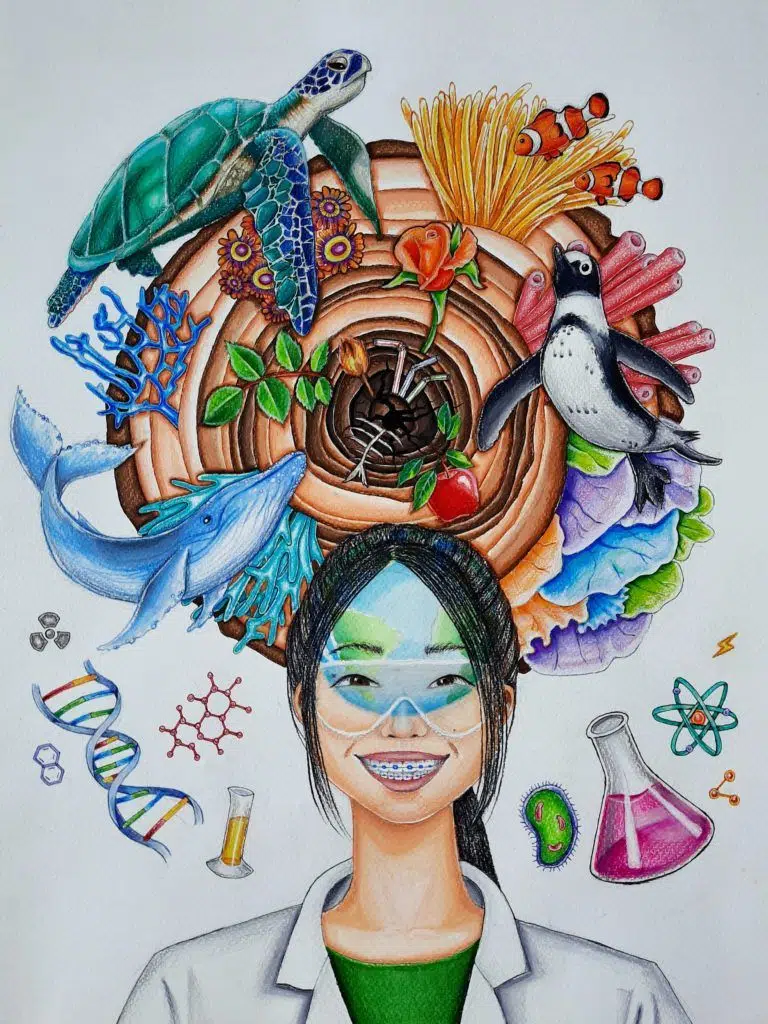 Resilience – by Ahrin Lee, 2020 Bow Seat Winner
It forced me to question whether I even belonged on that stage. As a less STEM-heavy student, I pondered how I could channel my journalistic and economics focus into technology for action. I had no coding experience and no fancy lab. As I discussed this opportunity with my Bow Seat mentorship team, especially Fredrick in Kenya, our discussion pivoted towards the technology that had united us despite all odds. This was when I realized our story couldn’t have been more fitting.
Using emerging technologies doesn’t always require a lab. It can be leveraged simply with a phone, a call around the world, and AI across linguistic barriers.
Drop the Script, Not the Mic
All of my Model UN speeches seemed to vanish in the face of the real UN. Suddenly, I was speaking about my small set of experiences in front of leaders who have worked on these goals for longer than you’ve been alive. Hours before, I had curated my ideas and captured them carefully on a set of short, coded index cards.
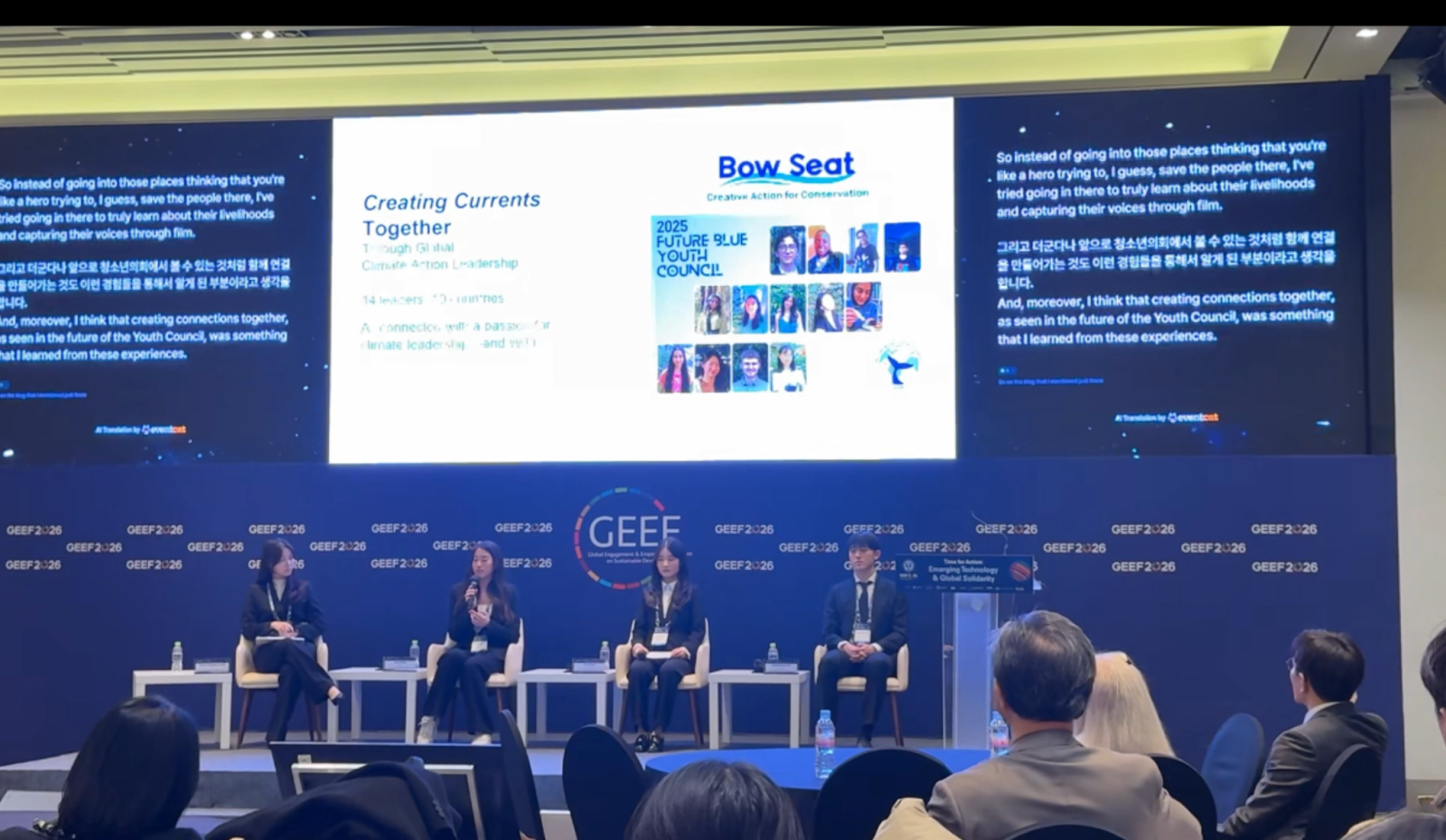
As I introduced myself and set out on my journey across 3 different continents and countries, I felt myself tucking these stacks of index cards away. I was able to face the crowd, mic in hand, legs awkwardly positioned—and spoke, for the first time, about the communities that have never been brought to light.
Beginning with an ever-un-glamorous issue of trash, I shared my journey from Sangamdong incineration protests to Kenya—all grounded on accessible, daily technologies as a medium, rather than high-tech.
BowSeat, Wifi, and Pajamas
What struck me most wasn’t how advanced our technology is—but how accessible it’s become. With the advent of AI, we can jump past linguistic hurdles. Whether it’s Kyrgyz in my Altyn-Kazyk documentary or Maasai songs or Indonesian interview transcripts, we’re equipped with new tools to dismantle barriers. Moreover, having a phone enables us to capture the voices of Altyn-Kazyk and collaborate with Kyrgyz college students year-round to continue our EcoEnglish Summer program.
Youth connections through Zoom were forged in Bow Seat. Meeting each month, we were able to hear from worlds we’ve never considered before. War zone injuries in Iran, sicknesses and flooding, holidays and more. A shared love for climate leadership and wifi connects us. Even with so many time zones (me joining at 2 AM in pajamas at the tail end), we still laughed, strategized, and bonded. And we’ve made strides towards climate action, strides that continue forward even after our 2025 term through continued feedback and youth-led workshops.
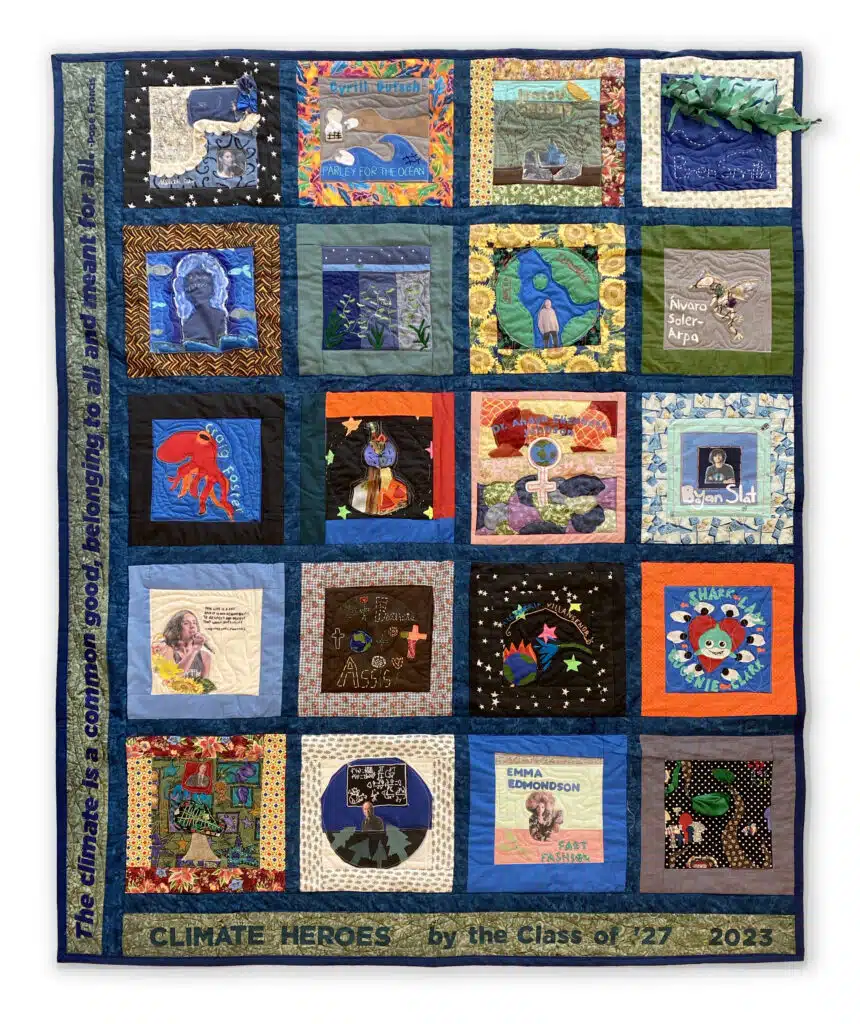 Climate Heroes Quilt – Sacred Heart School, Atherton 8th Grade Studio Art, Bow Seat 2023
AI Paradox: Connection or Ghostwriter?
The debate on stage was polarized: Does technology inherently widen the inequality gap, or can it close it?
I argued the latter—with a condition. For youth, impactful technology is often about resources and voice. Sustainability shouldn’t feel exclusive—or worse, performative.
I saw this at the Future Blue Youth Council. Translate using AI tools too, making connections so much more fluid—and at danger of misinterpretation, which is addressed through human collaborations. That’s where communication becomes more important than ever. Not just ‘tech’. It’s also simple photos and recordings to capture their voices, like our DiveHERs mentorship with Emma Batty.
However, a deeper tension emerged during our Fellowship Grant application reviews. I reflected on the questions that raced through my mind as I specialized in Africa and Central Asia for the grant programs.
I was honestly devastated that numerous submissions were AI-generated. Even after double-checking with numerous AI checkers, I was disappointed that ideas—some brilliant, others repetitive—were not their own. A counter-logic hit: in communities where English isn’t the first language, is AI a form of “cheating,” or is it the only way to be heard at a global table?
Ghostwriters to Speakers
Should we use discipline to help youth keep their voice, or should we honor the capacity of technology to expand historically silenced voices—even if it’s not 100% their own? This was a threshold of modern activism. Technology is a tool to uplift and let your voice be heard. AI shouldn’t steal your voice. Rather, it should be a megaphone that amplifies our collective voices. It can be leveraged as an amplifier for the marginalized people Ban Ki-moon spoke about earlier during the conference, not simply a ghostwriter sanitizing their grit.
Leadership doesn’t amount to a curated panel. It doesn’t end with the environment either. It always trickles to the people, because people carry movements forward. The most powerful “technology” we used wasn’t advanced—it was available.
Technology has made us a closer-knit community. It’s made the stakes of our voice higher and louder than ever. AI shouldn’t be the ghostwriter of our generation. Rather, it should act as a resonance that could make the world we believe in impossible to ignore because of our age. We move into action and beyond the talks. And I hope it’s clear by the 9th iteration of GEEF.