
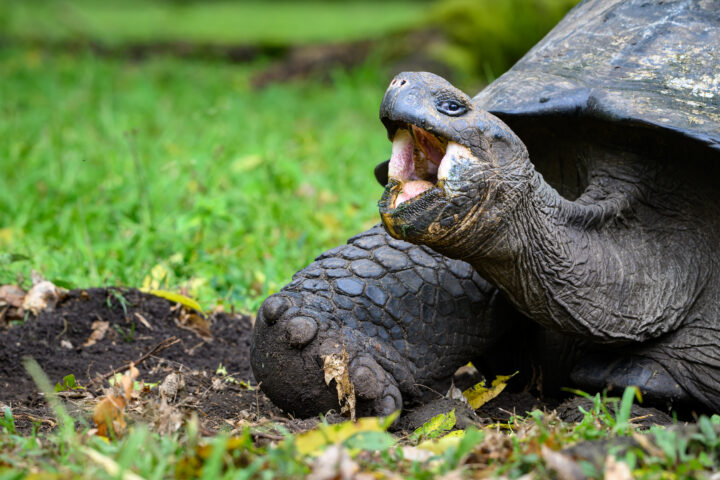
To Extinction and Back: How Galápagos Reintroduced Giant Tortoises
March 19, 2026By Rafael Bonilla Abad, 2025 Future Blue Youth Council member
Once upon a time…
Off the coast of what is now Ecuador, an archipelago of volcanic rock grew life. Untouched, it became a sanctuary bursting at the edges with biodiversity. It evolved so independently from the rest of the world that almost all of its species can be found nowhere else (Galápagos Conservation Trust). For centuries, the flora and fauna had lived in balance. Tortoises grazed, iguanas swam, birds flew, insects buzzed, all unaware of the footsteps of humans. But, by the time of Darwin’s arrival in 1835, mere years after colonization, changes were beginning to be felt (The Guardian, 2026). By the 1840s, there were already casualties (BBC, 2026). The gentle, giant tortoises of island Floreana (Chelonoidis niger) were extinct. Sailors had eaten them faster than they repopulated and had scattered them on different islands. One of the first species to fall, and not the last – but the others have their own story.
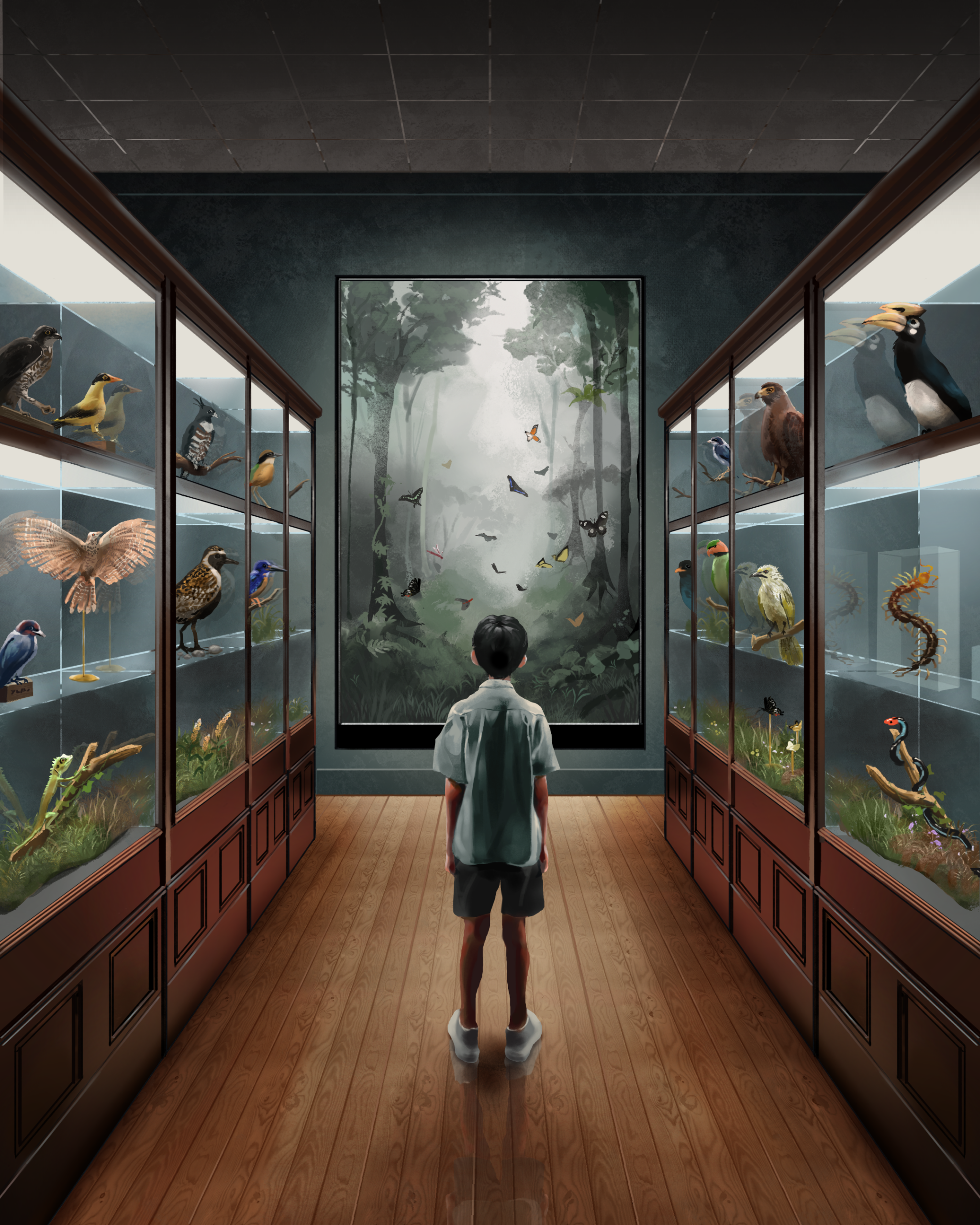 Museum of Ghosts by Ryan Chua (2024)
Since They’ve Been Gone
Galápagos has changed. Now an inhabited archipelago, the effects of extinction can be felt. Giant tortoises have been described as “ecosystem engineers” because of the way their activity shapes landscapes. They help restore degraded ecosystems, disperse seeds, create micro-habitats, shape vegetation, and much more (The Guardian, 2026). Without them, the ecosystem fell out of balance. It’s a story we’ve heard before, but I’m telling it because the ending is a bit different.
After well over a century and a half, something changed. Scientists discovered species with a similar genetic makeup. A spark of hope.
The scientists were determined to bring the species back to life, and to do it, they used a technique called “back-breeding” (BBC, 2026). Put simply, it involves breeding species to pass down desired traits (Shapiro B., 2016)–in this case, the goal being to “de-evolve” the species. To achieve this, scientists took species from a neighbouring island and bred them until they achieved 40-80% of the genetic makeup of Floreana giant tortoises. Now that these back-bred tortoises are 8-13 years old, they are strong enough to live on their own. Back-breeding is a crazy technique, but what I find the most interesting is that scientists believe that eventually the tortoises will develop the lost species profile. In other words, evolve back into the extinct species, if I understand correctly.
I suggest reading this DW article if you want to learn more.
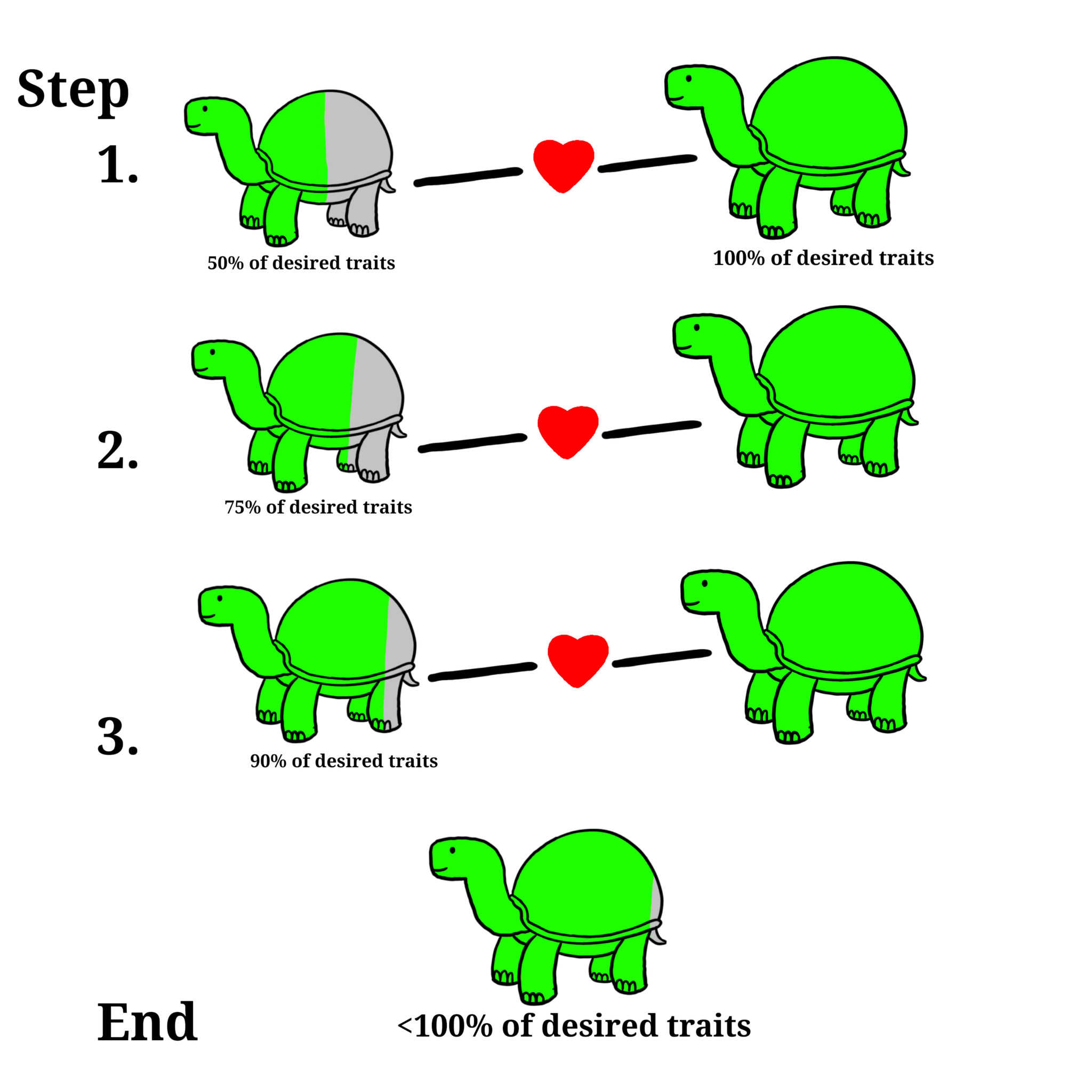 Simplified explanation of back-breeding. Desired traits get passed down through generations. Credit: Rafael Bonilla Abad
However, for back-breeding to work, other matters had to be taken care of first. Invasive species such as cats and rats were introduced by colonizers and sailors and needed to be removed. The archipelago might be special, but not enough to be immune to invasive species, and these slowly wiped out many species on the islands. The Galápagos Conservation Trust (GCT) removed rats and cats from Floreana to be able to welcome the new tortoises (The Guardian, 2026). That is a feat of its own and should be celebrated.
Now in 2026, nearly two centuries after they went extinct, giant tortoises were reintroduced to Floreana Island.
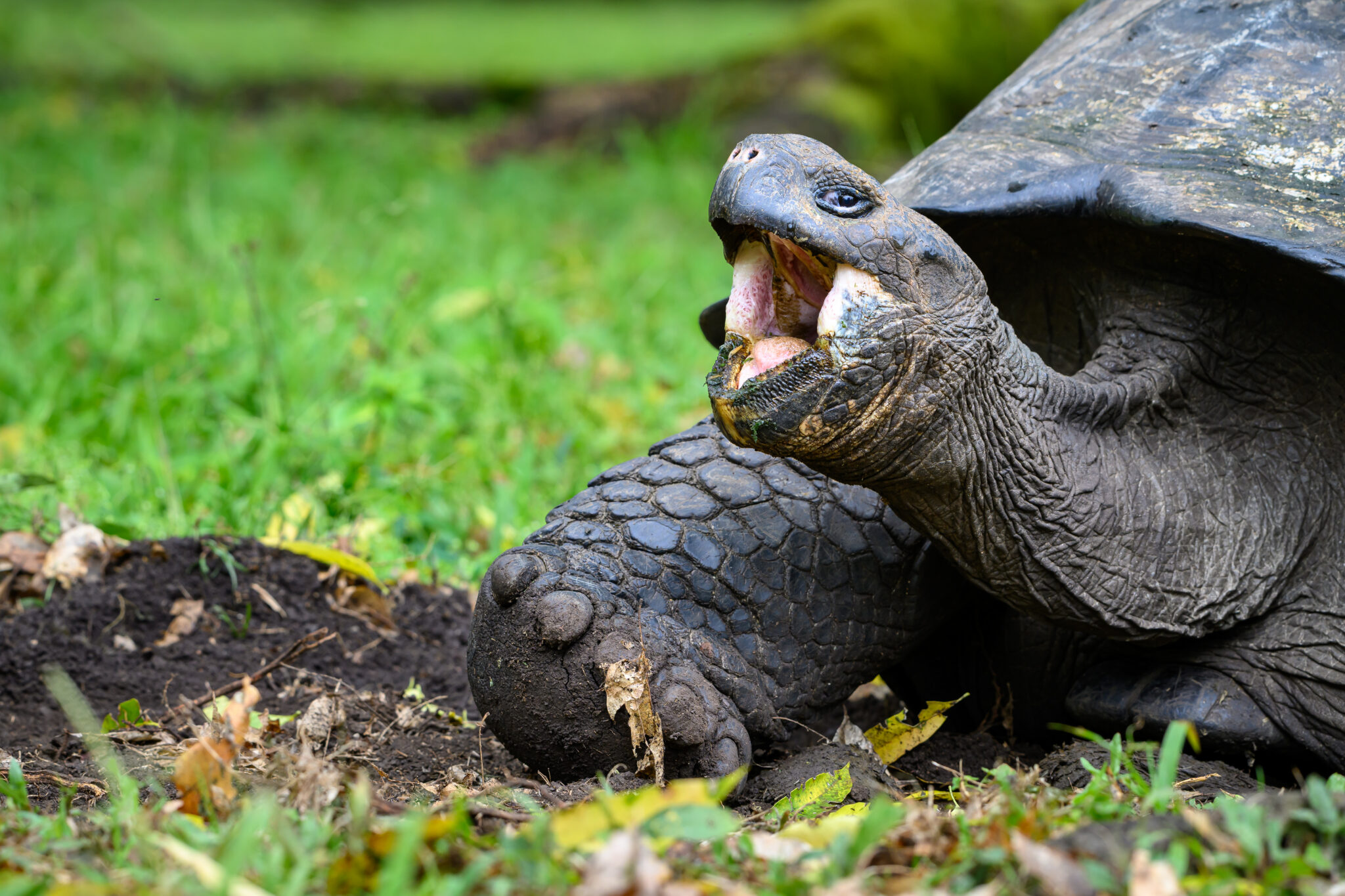 “Galápagos Tortoise”. Enoch Leung, 2025.
A Small Step for a Tortoise, One Giant Step for Conservation
When I heard the news, I was giddy, but I think what’s more exciting is what’s to come. Now, the GCT wants to reintroduce Floreana mockingbirds, which also went extinct over a century ago. Until then, we’ll watch turtles grow into adulthood and take better care of them this time. I’m hesitant to call this a “second chance” because it wasn’t by chance at all. It’s the culmination of years of effort and hope. Until recently, extinction meant the story was over. Now with advances in science, it might just be the middle of the book, albeit a tragic middle.
References
Barkham, P. (2026, February 20). Floreana giant tortoise reintroduced to Galápagos island after almost 200 years. The Guardian. https://www.theguardian.com/world/2026/feb/20/floreana-giant-tortoise-reintroduced-to-galapagos-island-after-almost-200-years
Global relevance – Galapagos Conservation Trust. (2026, January 19). Galapagos Conservation Trust. https://galapagosconservation.org.uk/about-galapagos/why-galapagos-matters/global-relevance/
Oelofse, L. (2026, February 23). Giant tortoises reintroduced to a Galapagos island. dw.com. https://www.dw.com/en/giant-tortoises-reintroduced-to-a-galapagos-island/a-76072073
Rawnsley, J. (2026, February 21). Giant tortoises return to Galápagos island after nearly 200 years. https://www.bbc.com/news/articles/c9wn1jrzk4go
Shapiro, B. (2016). Pathways to de‐extinction: how close can we get to resurrection of an extinct species? Functional Ecology, 31(5), 996–1002. https://doi.org/10.1111/1365-2435.12705