Charcoal
If you are looking for a freeing, fast, and expressive version of drawing, charcoal may be the medium for you! While messy, it is about as cheap as its art supplies can get (charcoal from a fireplace works surprisingly well too!) and has solutions to many of the challenges that come with graphite—eg. shiny glare, hard on paper, slow process. Furthermore, there are many different approaches to using charcoal, from drawing just like a regular pencil to “painting” with dry charcoal powder. Here is a place to explore the ins and outs of this exciting medium!
Pros
- Fast medium—covers large areas quickly
- Smudges very easily
- Very dramatic value range (can get very very dark!)
- Flexible and forgiving
- Erasable
- Some methods can be gentler on paper
Cons
- Smudges very easily (notice how this is both a pro AND con!)
- Messy
- Can be rough on paper
- Monochromatic
- Can be difficult to control and achieve precision
In essence
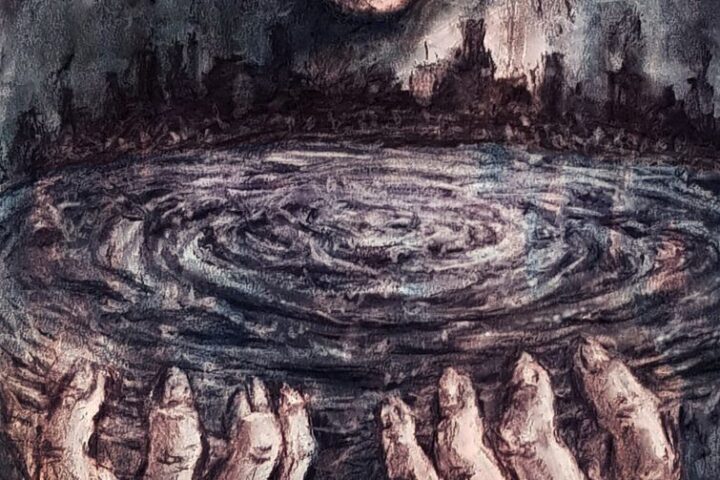
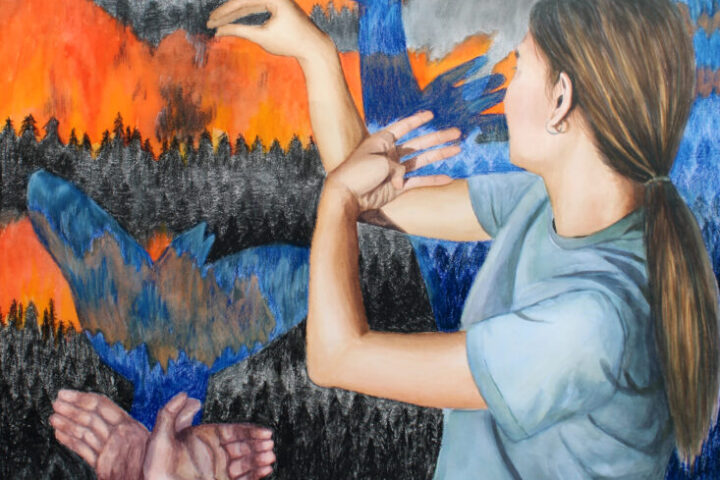
Charcoal produces rich, deep blacks and a wide range of gray tones, making it ideal for expressive, high-contrast artwork. Charcoal is easily smudged, blended, or erased, allowing for flexible mark-making but requiring fixative to preserve finished work and prevent unintentional smudging. Its ability to cover large areas quickly and the beauty of intentional smudging make it excellent for abstract art pieces playing with form and shadow. It can be more difficult to produce fine detail due to its softness and messiness, but if it is reigned in properly, it can be an excellent medium for hyperrealism.

Guides
Tips and tricks
- Play around with your tools! From beauty blenders to your own fingers, use your imagination and come up with a method that works best for you. Charcoal is forgiving and versatile, responding to different tools with incredible and unique textures.
- Use the right paper. Paper that is rougher can hold charcoal, especially charcoal powder, more predictably. However, if you want a smoother look or are pursuing certain realistic textures, smooth paper might be the way to go.
- Use a kneaded eraser! While this adds a new item to your shopping list, these erasers are very cheap and last for years. Unlike your typical pencil eraser, kneaded erasers can be shaped as needed to create intricate textures. You could create the tiniest point when adding specks of light to a turtle’s eye, or shape a wide edge for adding highlights to a wide kelp frond.
- Beware unintentional smudging! Use a piece of blank paper to rest your hand on to avoid smudging as you draw or keep your hands off your paper altogether. Some artists take rods or pieces of wood and set them up above their paper to brace their hands as they sketch.
- Store carefully and apply fixative! Charcoal pieces are very prone to smudging with the slightest of touches. To prevent this, spray your pieces with a fixative spray (these can be bought at nearly any art store) or even hairspray will suffice if you will not be too disappointed if slight discoloration occurs.