Siento que el mundo se está acabando. ¿Ahora qué?
June 4, 2026By Rafael Bonilla Abad, 2025 Future Blue Youth Council member and Alumni Intern
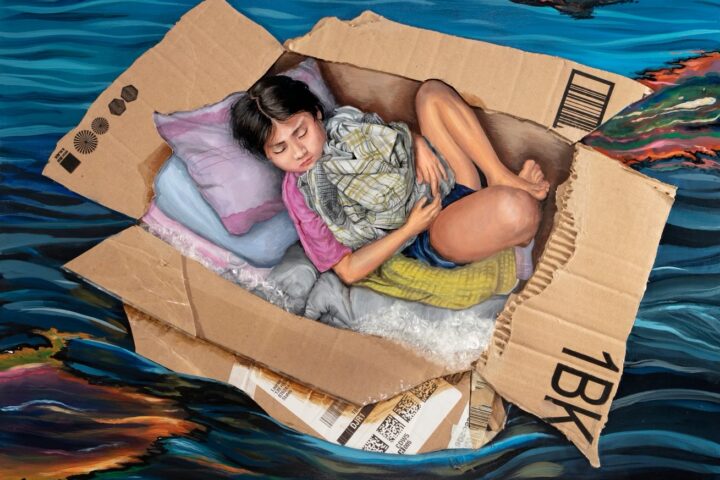
Cover image: Climate’s Orphan by Jeong-Won Namgung (2024)
De pequeño aprendí sobre el calentamiento global y sentí que el mundo se había acabado. Esto se llama ansiedad ambiental y es un sentimiento común entre jóvenes. Es causada por el estrés que provoca el cambio climático. Ya sea si nos ha afectado directamente o no; nuestro cerebro entra en pánico de todas formas. En el 2025 la UNICEF reportó que 60% de jóvenes están “muy” o “extremadamente” preocupados por el medio ambiente. Hablando con otras personas de mi edad, puedo confirmar esta tendencia. En mi experiencia, esto se debe en parte a que aún no hemos aprendido a manejar nuestras emociones cuando casualmente somos introducidos a un tema tan complejo. Sin embargo, la preocupación se puede aprender a manejar y no tiene que ser paralizante como lo fue para mí de pequeño.
El primer paso que tuve que tomar para manejar mi ansiedad fue simple pero no por eso fue fácil. Tuve que identificar exactamente qué sentía y por qué. En mi caso sentía una falta de control sobre mi situación. Por lo tanto, la solución era participar en actividades en las que podía ayudar a luchar contra el cambio climático. Por ejemplo, en el colegio participé en iniciativas como eliminación de especies invasivas y reforestación en Galápagos. Luego de graduarme me uní a Bow Seat. A través de los años, he hecho murales, escrito sobre temas ambientales, colaborado con otros jóvenes en Estados Unidos y en todo el mundo, entre otros. Uno de mis proyectos favoritos es en el que colaboré remotamente en Nepal. La meta era reducir el consumo de plástico de un solo uso, y para ello se revivió la tradición de artesanías locales llamadas Duna (platos descartables hechos de hojas) y Doko (canastas de bambú diseñadas para transporte). Desde que comencé a ser más consistente con las iniciativas en las que participo, mi estrés sobre el cambio climático ha estado mucho más controlado. Eventualmente me di cuenta que no existen soluciones mágicas pero si haces algo pequeño todos los días el efecto se acumula.
Trabajar con Bow Seat me hizo darme cuenta del poder que el arte puede tener en uno. Como mencioné antes, el primer paso era simple pero no fácil. Muchas veces es casi imposible de entenderse a uno mismo ya que los sentimientos son tan grandes y abstractos. A mí el arte me ayudó con esto. Es una forma de salir de mi “rutina mental” y ver mi situación con una mente más despejada y objetiva. Puede también ayudar a manejar el estrés y si quieres lo puedes usar como forma de activismo. Yo creo que los beneficios de los hobbies creativos se deben a que el proceso creativo es libre de juicio entonces no hay la presión externa de hacer las cosas perfectas, ni el temor a dar vergüenza. Considero importante tener espacios libres de críticas, especialmente con temas tan estigmatizados como este. Le da la oportunidad a uno de entender y procesar sentimientos a su propio ritmo. Además, puede ayudar a conectar con otras personas o crear una comunidad que se apoye entre sí. Hay muchos beneficios de tener una actividad creativa a la que puedas recurrir cuando necesitas desahogarte. Como mínimo, ayuda a pasar bien el rato.
Hay que recordar que la ansiedad ambiental no es algo que nos hace débiles, es una prueba de nuestra empatía. Preocuparse por nuestros futuro y de los que aún no llegan es parte de lo que nos hace humanos, pero no significa que hay que temer el futuro. Yo creo que lo mejor que se puede hacer es tomar parte de actividades que faciliten manejar las emociones, y unirse a proyectos que nos apasionen. Encontrar una meta solidaria o un proyecto colectivo puede brindar la motivación que necesitas para guiarte en tus días más difíciles. Para mí, al menos, la solución trata sobre hábitos pequeños de todos los días, como cuidar un jardín metafórico. Hay que ir ajustando las medidas todos los días, pero eventualmente llegas a un balance. Espero que puedas encontrar lo que a tí te ayuda a manejar tu estrés ambiental (o cualquier otro tema que te esté pesando).
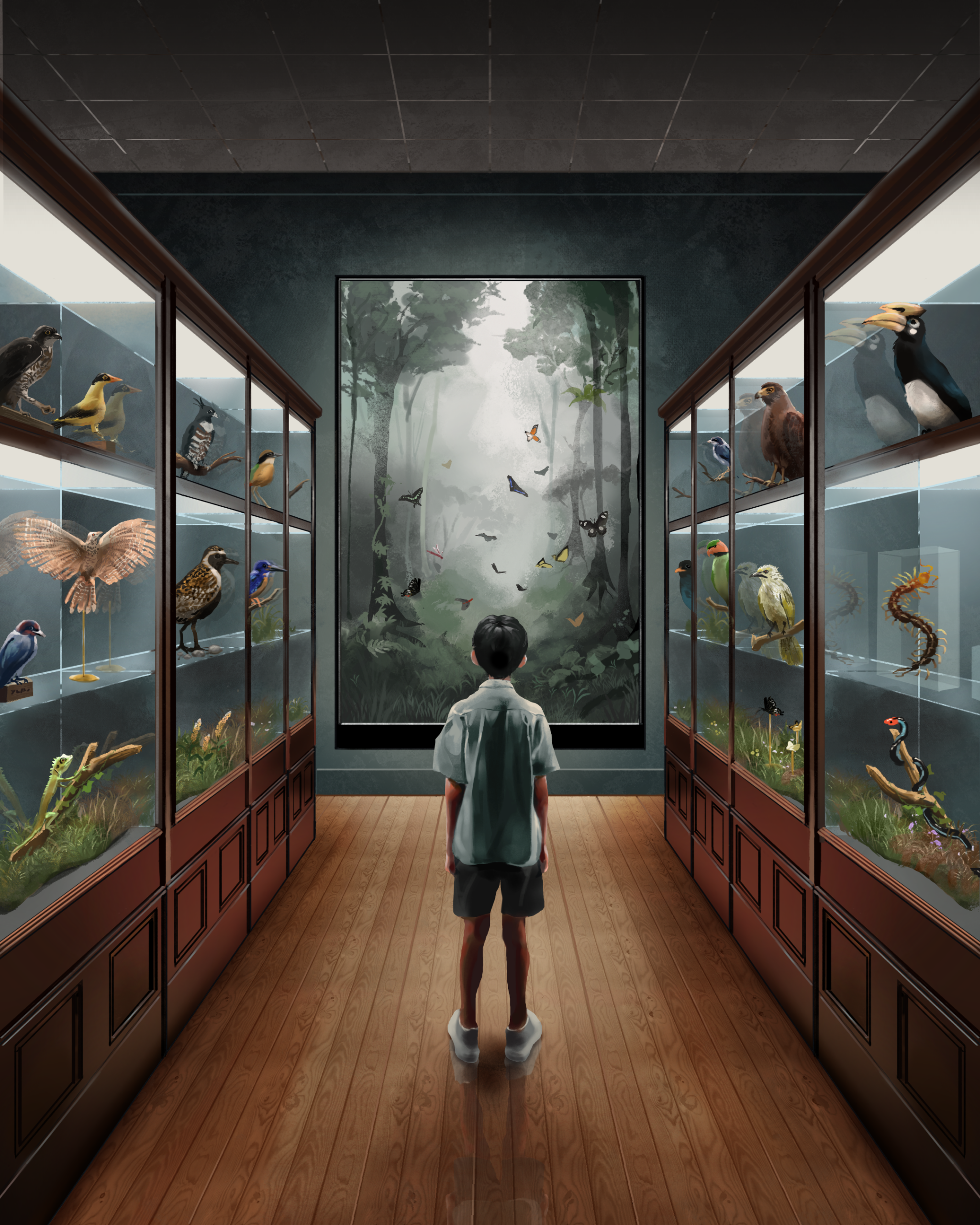 Museum of Ghosts by Ryan Chua (2024)
English Translation:
I feel like the world is ending. What now?
As a kid, I learned about climate change, as one does, and felt that my world had ended. This is a little something called eco-anxiety and is a common feeling among youth. It’s caused by the stress that climate change invokes in us, whether it has affected us directly or indirectly. Our monkey brain freaks out either way. In 2025, UNICEF reported that 60% of youth are “very” or “extremely” worried about the environment. In conversations with other people my age, I can confirm that the numbers check out. In my experience, eco-anxiety is due in part to us not having fully learned to handle our emotions when someone casually introduces us to such a complex topic. However, we can learn to handle these emotions so they’re not as paralyzing as they were for me when I was still under a meter tall.
The first step I had to take to manage my eco-anxiety was simple, but easier said than done. I had to start by identifying exactly what I felt and why. For me, it was a lack of control over the situation. Therefore, the solution was to participate in initiatives where I could help fight the climate change demon. For example, while in school, I participated in the removal of invasive species and reforestation in Galápagos. After graduating high school, I joined Bow Seat! Throughout the years I’ve painted murals, written about environmental topics, collaborated with changemakers from the US and Nepal, and much more. A project I hold dear to my heart is the one I collaborated with in Nepal as part of my year as a Future Blue Youth Council member. The goal was to reduce the consumption of single-use plastic by reviving the tradition of local handcrafts like Duna (disposable leaf plates) and Doko (portable bamboo baskets designed for transport). Since I started being more consistent with the initiatives I take part in, my stress has been much more manageable. Eventually, I realized there are no magic solutions, but if we all do something small every day, the effect accumulates.
My time here at Bow Seat has made me realize the power that art has. As I mentioned before, the first step to curing my eco-anxiety wasn’t easy. Often, it’s almost impossible to understand oneself. Art helped me with this. It’s a way of taking a step back from my “mental routine” and look at my situation more objectively. It can also help manage stress, and, if you want, you can turn it into a form of activism. I think the benefits of creative hobbies come from the arts having the advantage of being judgement-free during the creative process. There’s no external pressure to make things perfect, nor is there fear or shame. I think it’s important for everyone to have this kind of space where they can explore topics that might be embarrassing, stigmatized, or just plain hard to deal with. Plus, you can connect with people and find a community through art; just look at Bow Seat! At the very least, it helps pass the time.
It’s important to remember that eco-anxiety isn’t something that makes us weak, it’s a testament of our empathy. Worrying about our futures and the futures of those who are yet to come is part of what makes us humans, but it doesn’t mean we have to fear the future. I think the best we can do is participate in activities that help us manage our emotions, and join projects that ignite our passion. Setting an honorable goal or finding a collective project can bring the motivation you need to guide you in your hardest days. For me, at least, managing this sinking feeling is about small habits I do every day, like taking care of a metaphorical brain garden. You need to adjust your strategy every day, but eventually you reach a balance. I hope you find the thing that helps you manage your eco-anxiety (or anything else that’s weighing on you).