Turning Trash into Environmental Truth
July 29, 2025By Gavin Tesser, 2025 Future Blue Youth Council member
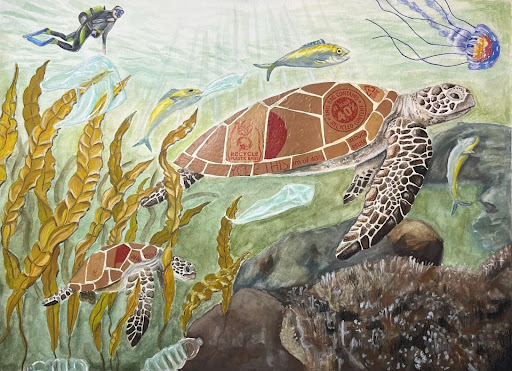
Cover photo: Shell Shock by Gavin Tesser
Painting a sustainable future, one stroke at a time. That is what people say about environmental art, including me. But what if it could do more? What if it did not just illustrate the problem, but physically contain it?
That is what happens when artists use recycled materials. The art does not just speak about the problem. It is made from it. In this way, art becomes both the messenger and the message, exposing our environmental impact through every texture, layer, and recycled element.
The Bigger Picture: More Than Pretty Paintings
Art should not only be a means of appeasing viewers; it can be uncomfortable, spark conversations, and ignite policy change. In many communities and cultures, recycled art has emerged as a global movement. For instance, artists from Illinois to the Middle East are turning plastic bottles, tires, and electronic waste into grand public installations that highlight consumption and sustainability at the same time (Al-Banna). These works may be two- or three-dimensional and provide a visual, tangible account of the waste we generate, making the consequences of our choices impossible to ignore. As Mrs. Salwa Nabhan, a faculty member at the Sharjah Higher Colleges of Technology, affirms, “Installation Art is good for the environment because it takes everyday objects and transforms it into a valuable artwork” (Al-Banna).
Furthermore, by engaging with creative projects that make something positive out of waste, environmental art can help alleviate eco-anxiety, which is defined as “the distress caused by climate change where people are becoming anxious about their future” (Coffey et al.).
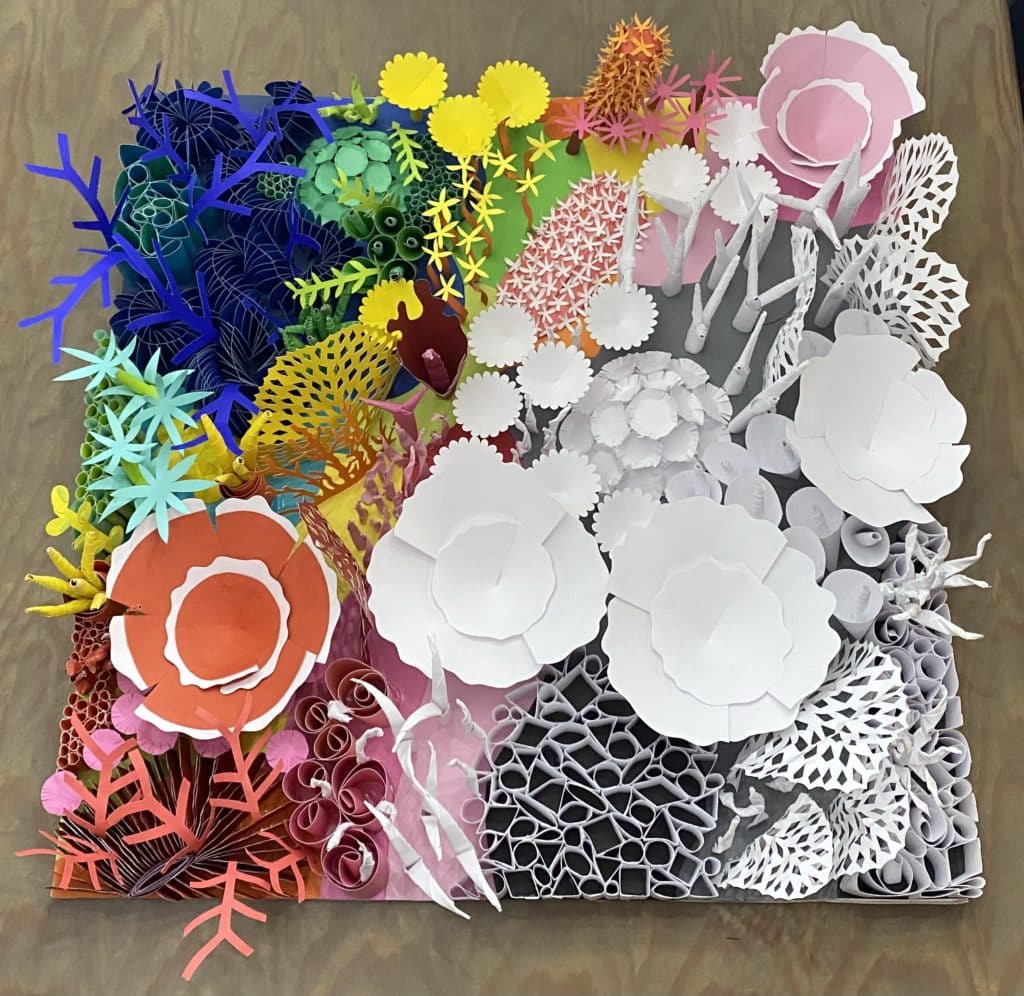 Changing Coral by Isabella Campos
From Idea to Action: The Spark Behind Environmental Artwork
Turning environmental art and literacy into recycled materials, Future Blue Youth Council Member Gavin Tesser started the organization called Pencil 2 Planet (P2P), which focuses on engaging youth in the environmental movement through art projects with recycled materials. To date, P2P has taught environmental art and literacy classes to over 5,000 underprivileged youth through camps, public art galleries, partnerships, and more. Environmental art is a powerful tool for educating the next generation because it resonates deeply with young minds, turning abstract issues into something they can see, feel, and understand.
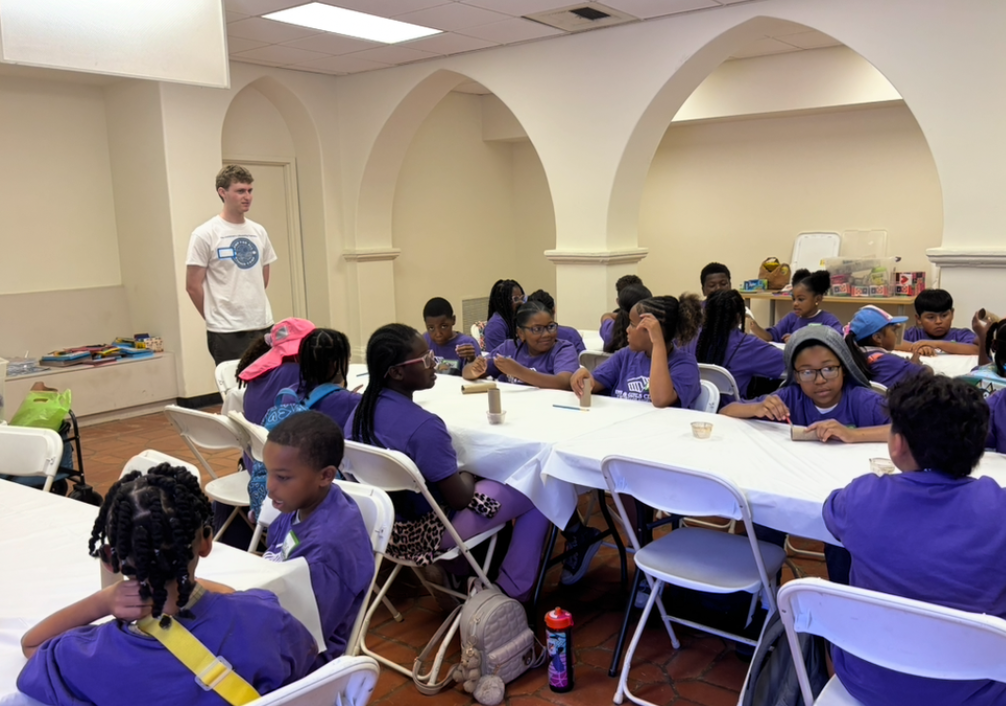 Photo by Gavin Tesser
Around the globe, people of all ages are joining this creative call to action. One of the most powerful recent examples is in Venezuela, where artist Oscar Olivares, with hundreds of community volunteers, created a 270-square-meter mural in Guatire using one ton of plastic bottle caps. In a country where recycling is uncommon, this vibrant mural stands beside a busy avenue and serves as both a work of art and a striking message about recycling’s possibilities and the impact of plastic pollution on ecosystems. The project even inspired those like local bricklayer Danny Serrano, who began teaching his children about recycling after participating in the mural’s construction—proving that recycled art can be a catalyst for awareness and generational change (Baratz).
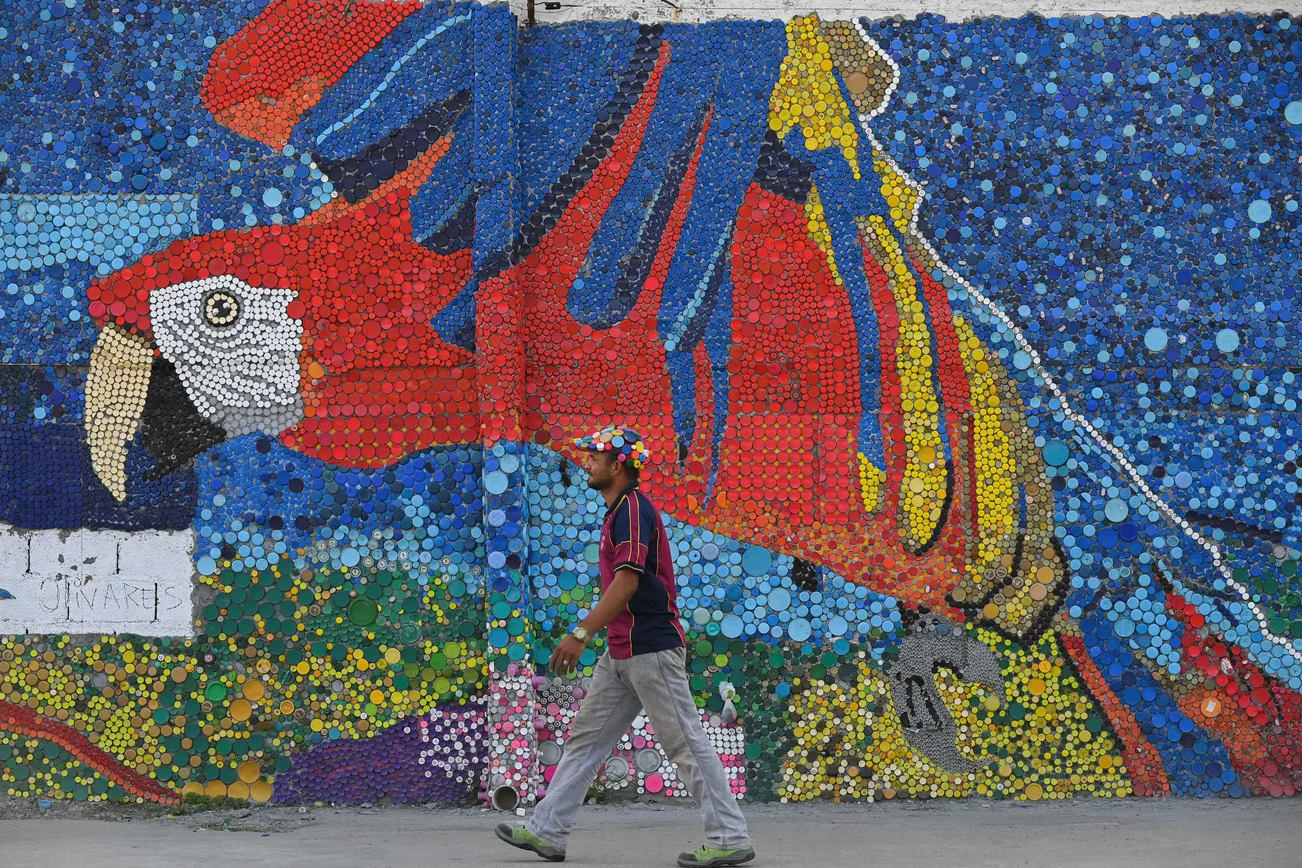 Photo by Federico Parra, AFP Via Getty Images
What Waste Can Say
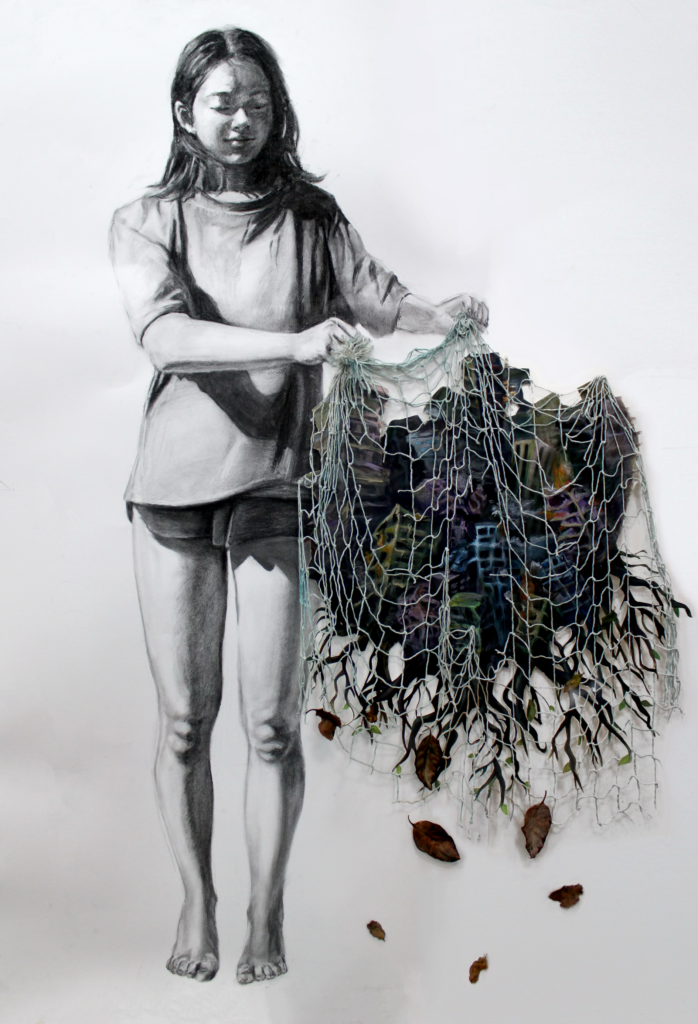 Reclaiming Nature by Meilin (May) Shen
This piece, a 2024 Ocean Awareness Contest winner, uses the image of the artist pulling burned buildings out of the ground to show how people are both affected by and responsible for wildfires and climate change. The real net and leaves in the artwork stand for how we are all tangled up in this problem, helping Meilin successfully establish a connection with recycled materials and advance her idea. Meilin says, “I hope to warn people about the detrimental imprints humans leave and inspire others to improve the environments they cherish.” Her own experiences escaping wildfires made her want to inspire action and show that anyone can help restore the environment.
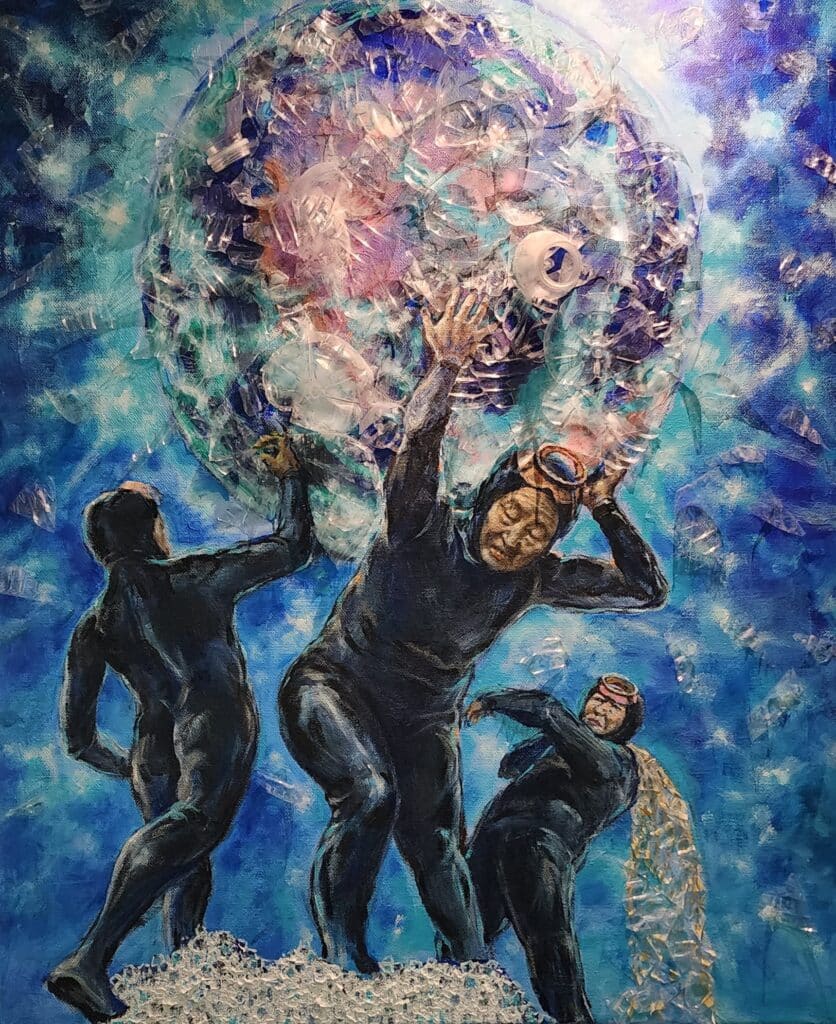 Heroines Below the Surface by Yewon Woo
Yewon’s artwork, also a 2024 Contest winner, shows Haenyeo, the legendary Korean women divers, as heroes cleaning up the ocean. Inspired by living on Jeju Island and seeing Haenyeos in real life, Yewon chose to paint them not just at work but as strong figures carrying the weight of pollution, almost like Atlas. Atlas, in Greek mythology, was forced to carry the sky as a burden. She explains, “I decided to create a parody of Atlas with Haenyeos,” because these women help the environment by picking up trash from Jeju’s waters. Through her painting, Yewon successfully incorporates real recycled plastic to make a connection between her materials, processes, and ideas.
Not Solutions, But Symbols
These works are not a simple solution to the waste crisis, but they are powerful symbols. They prompt reflection, provoke dialogue, and sometimes shape community or even policy actions. By turning trash into art, creators remind us all of the possibility for transformation and the responsibility that possibility brings. Recycled art inspires and educates, using creativity to give hope and a voice to the environmental movement.
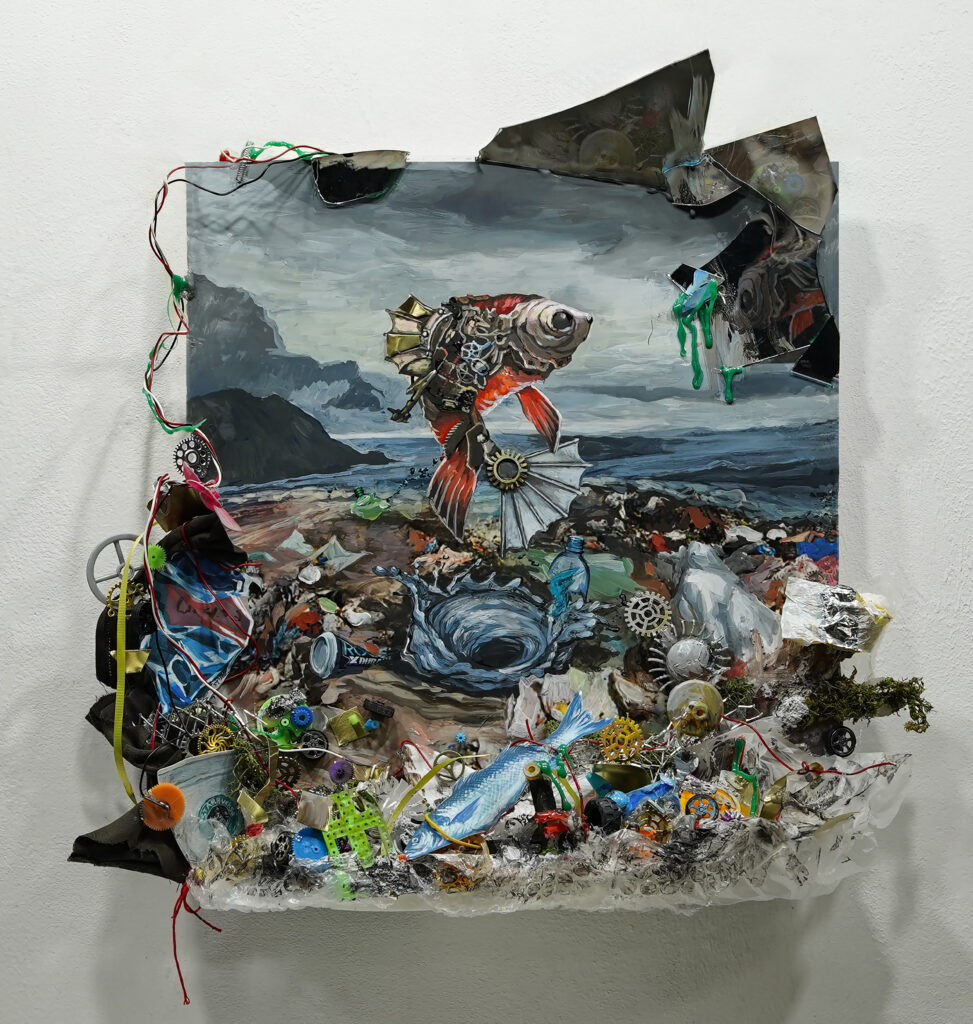 Land-ful-filling Prophecy by Heyon Choi
What You Can Do
- Getting involved is simple. Start by collecting discarded materials around your house or neighborhood. Challenge yourself (or others) to create something meaningful out of them.
- Submitting your work to the Bow Seat Ocean Awareness Contest is a great place to start. This global competition encourages students to express their ideas about ocean conservation through art, poetry, and film. Find out more or submit your work here.
- Teaching environmental art and literacy classes in your community is another impactful step. By leading classes at your school, a community center, or even online, you inspire others to think differently about sustainability and creativity. Sharing what you know helps people of all ages become more engaged and aware.
- Try to get your art displayed in public spaces or schools. Recycled art that’s visible in everyday places sparks fresh conversations about waste and sustainability. Reach out to schools, libraries, or local centers to see if your work could be exhibited.
Let every brushstroke, every piece of trash, and every recycled sculpture be a witness and a call. Our world is what we make of it. And sometimes, what we throw away can become the most powerful truth of all.
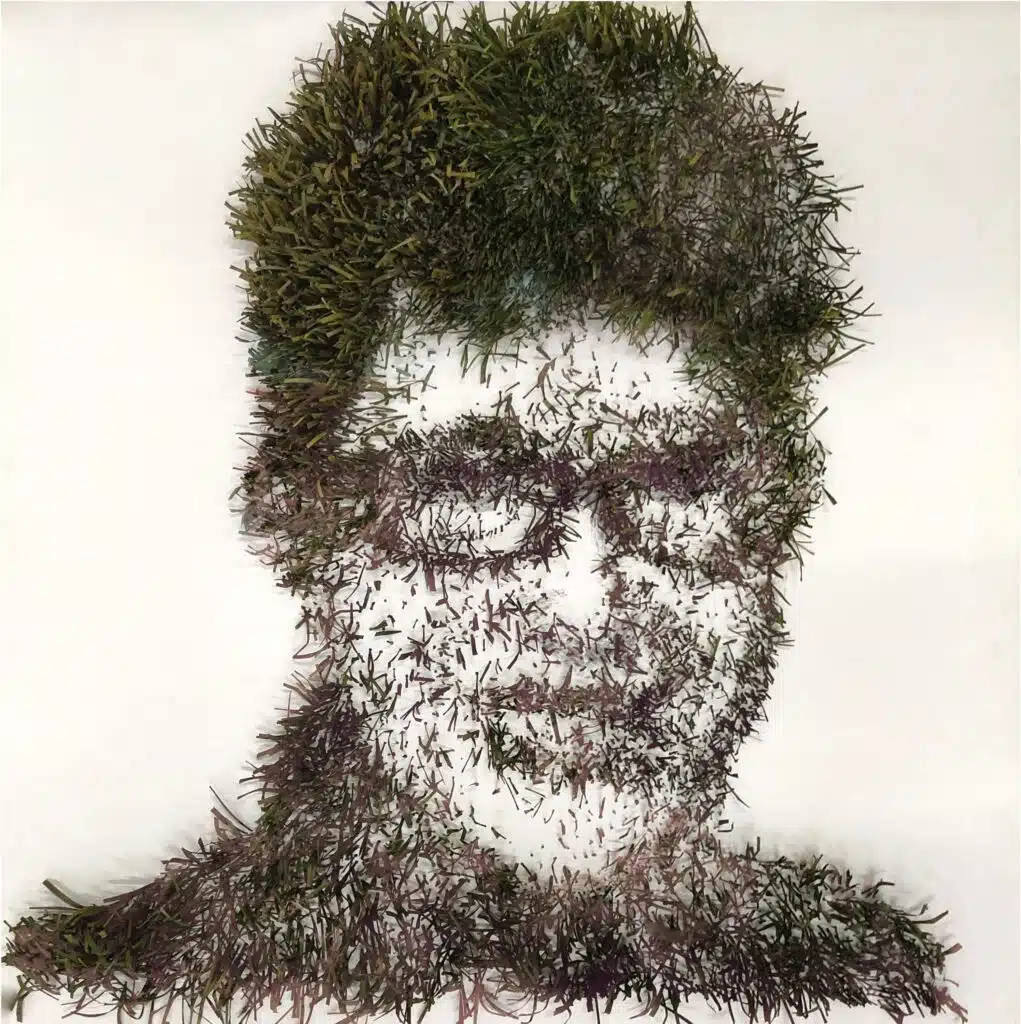 Resilience Unearthed by Xinyan Meng
Works Cited
Baratz, David. “From Trash to Treasure: Recycled Art to Inspire You on Earth Day.” USA TODAY, USA TODAY, 21 Apr. 2021, https://www.usatoday.com/picture-gallery/news/world/2021/04/21/trash-treasure-recycled-art-inspire-you-earth-day/7304971002/.
Coffey, Yumiko, et al. “Understanding Eco-Anxiety: A Systematic Scoping Review of Current Literature and Identified Knowledge Gaps.” The Journal of Climate Change and Health, Elsevier BV, Aug. 2021, p. 100047. Crossref, doi:10.1016/j.joclim.2021.100047.
“Recycling and Artwork: An Environmental Approach to Art.” EcoMENA, https://www.facebook.com/ecomena, 12 Apr. 2025, https://www.ecomena.org/recycling-art/.